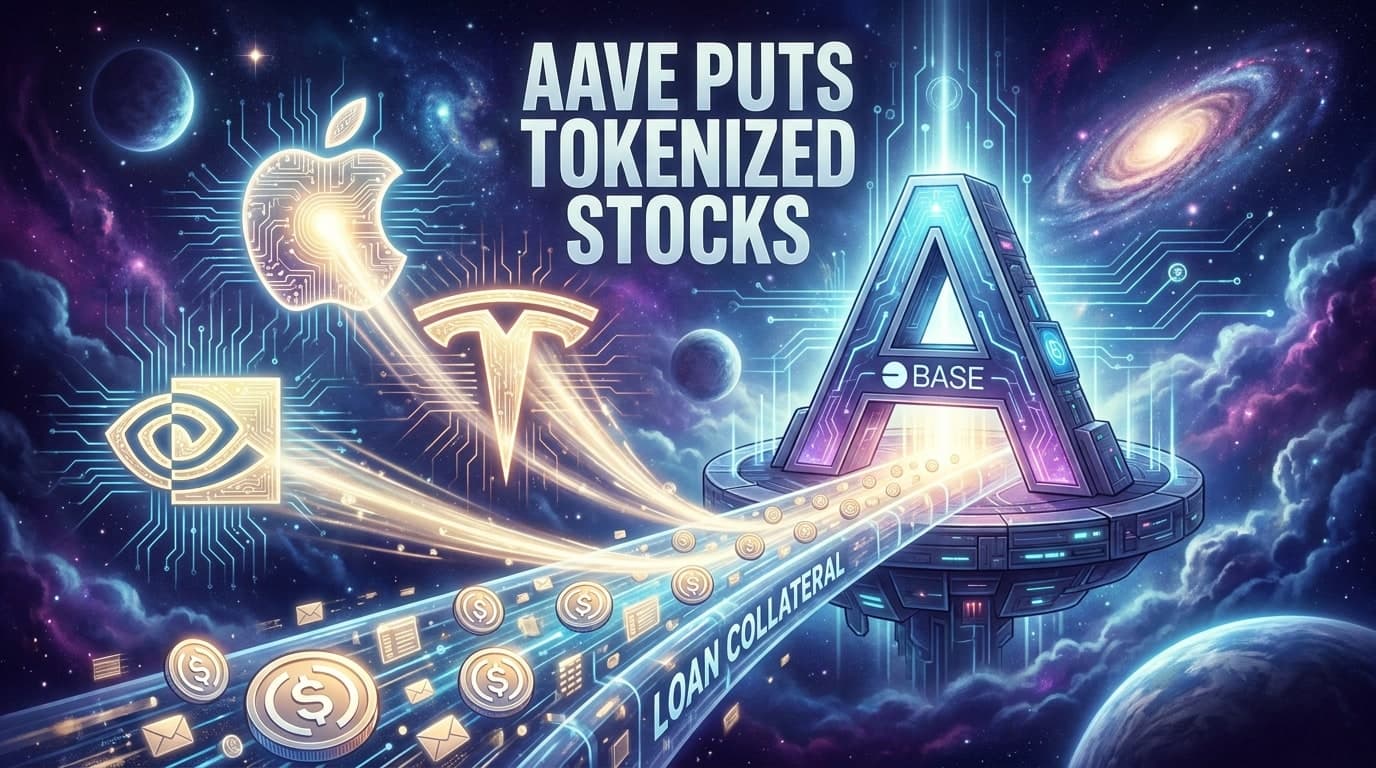
Aave Adds Tokenized Stocks as Loan Collateral on Base
Aave's V4 lending market on Base began accepting tokenized shares of Apple, Nvidia, and Tesla as collateral for USDC loans. Everyday wallet users outside the US can now turn real stock exposure into spendable crypto credit, without selling a single share.
What actually happened
Aave V4 on Base added seven tokenized stocks, including Apple, Nvidia, and Tesla, as collateral for USDC loans, The Block reported on 25 September 2026. The market sets a borrowing cap of 21 million USDC and only serves eligible non-US investors, according to The Defiant. Coinbase issues the underlying stock tokens, linking a regulated brokerage product to an Ethereum layer 2 lending pool. At the time of reporting, ETH traded at $2,691 (USD), up 0.77% over 24 hours, ranging between $2,677 (USD) and $2,698 (USD). Trading volume reached $7.18 billion (USD) in 24 hours, against a market capitalisation of $328.58 billion (USD).
How we got here
Coinbase-issued stock tokens have spread across DeFi through 2026, moving tokenized equities from pilot tests into working credit markets. Aave's Base listing extends earlier real-world-asset collateral experiments, pushing Ethereum layer 2s further into stock-backed lending. Separately, SEC staff issued FAQs saying qualifying liquid staking receipts fall outside securities rules, easing some staking uncertainty. Ethereum's NFT layer also drew attention this week: Magic Eden flagged a flaw in an old payment processor standard, prompting a whitehat rescue of more than 23,000 NFTs. These parallel moves show DeFi infrastructure maturing on several fronts at once, not just in lending.
Why this matters for you
For everyday wallet users, this expands what counts as spendable collateral: stock exposure now unlocks USDC without a sale or a brokerage transfer. For bonuz users tracking layer 2 activity, each new collateral type on Base adds real usage beyond token speculation. For builders, Aave's model offers a template other lending protocols could copy on other chains. For stakers, the SEC's FAQ lowers some legal uncertainty around liquid staking tokens, though it remains staff guidance, not binding law. For NFT holders, Magic Eden's rescue is a nudge to move listings off outdated payment processor standards before exposure returns.
The bigger question
If tokenized stocks become standard collateral across decentralized finance, does that make lending markets sturdier, because collateral spreads beyond crypto, or shakier, because equity swings and stock-market trading hours seep into pools that never close? Everyday users borrowing against shares may feel that tension first. The answer may decide which networks institutions and retail wallets alike trust to hold real-world assets long term.
What to watch
Watch whether Aave's 21 million USDC cap on Base fills quickly, an early signal of demand for stock-backed loans. Watch how liquid staking platforms respond to the SEC's FAQ in coming weeks. Magic Eden's rescue effort continues, and older Ethereum NFT listings still need migration. bonuz users following Base lending can track how this market grows from here.