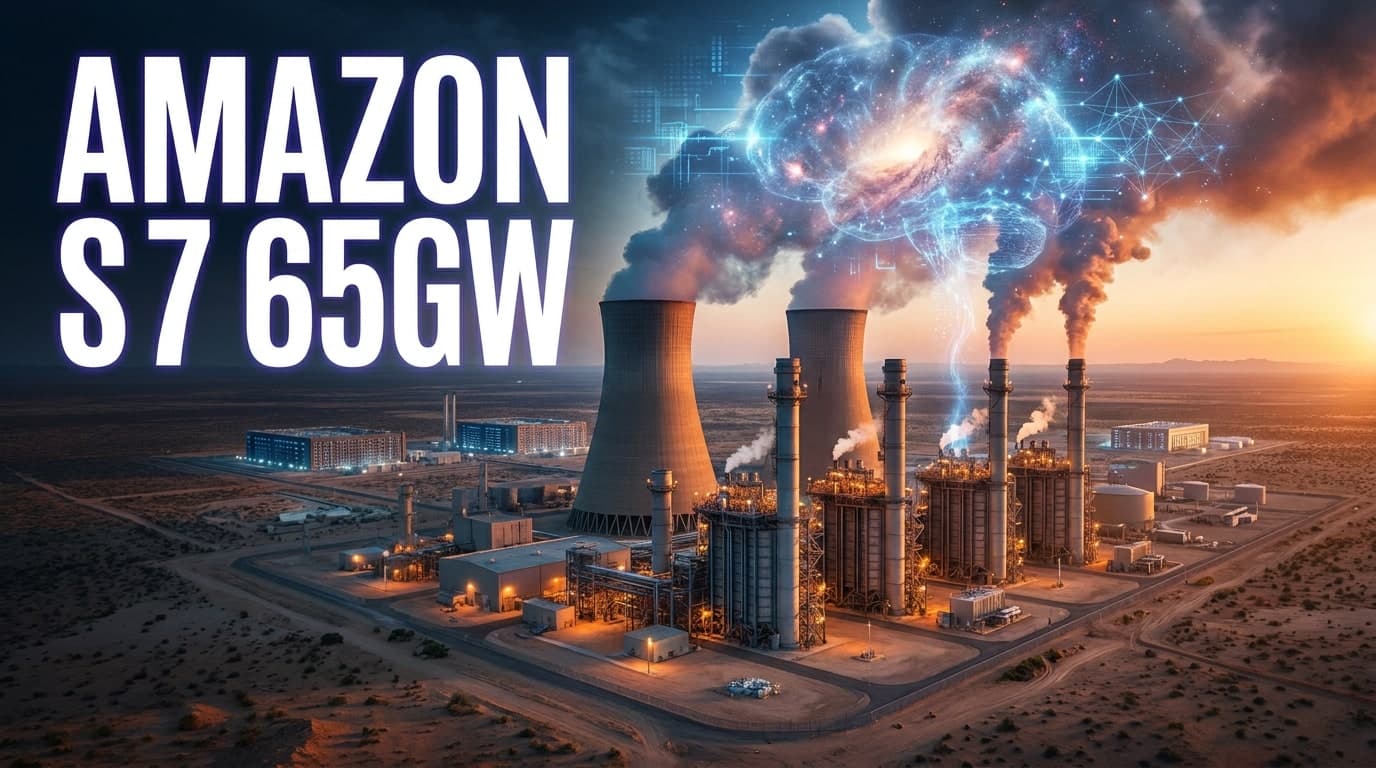
Amazon Texas Gas Plant Could Become Top US CO2 Source
Amazon is reportedly building a massive gas-fired power plant in Texas solely to feed a new AI data center. Its emissions permits could make it the single largest carbon polluter in the country, raising fresh questions about AI's real energy cost.
What actually happened
Amazon is reportedly constructing a 7.65 gigawatt natural gas plant in Texas, using 35 turbines to power a new AI data center directly, per Bonuz. Permits allow the facility to release as much as 33 million tons of CO2 equivalent annually. That figure alone could rank it as the largest single carbon emitter in the United States. The report gives no completion date, exact Texas location, or planned compute capacity for the data center. Amazon has not publicly confirmed these emissions figures, according to available reporting. No third party has independently verified the projected CO2 volume either.
How we got here
AI compute demand has outgrown what many power grids can deliver quickly. Rather than wait on grid upgrades or new renewable capacity, hyperscalers like Amazon increasingly build private power plants next to their data centers. Texas offers fast permitting for gas infrastructure and a deregulated grid through ERCOT, making it a favored site for this approach. Natural gas delivers steady, on-demand power that solar and wind cannot yet match at this scale. This mirrors a wider industry shift: as AI training and inference workloads grow, fossil fuel generation keeps filling the gap clean energy has not closed fast enough.
Why this matters for you
For crypto and Web3 infrastructure players, this is a reminder that electricity, not chips, may decide who scales AI compute fastest. AR and smart-glasses developers who lean on cloud AI inference could see costs shift as power deals get bundled into cloud contracts. Investors watching Amazon should weigh reputational and regulatory risk tied to a project this size. Texas communities near the plant may face new scrutiny over air quality and local electricity pricing. Builders planning hardware roadmaps should treat power access as a core constraint, not an afterthought, when forecasting AI and AR product timelines.
The bigger question
Can AI infrastructure keep expanding at this pace without a parallel surge in clean power capacity, or does fossil fuel generation become the default answer to compute growth? The outcome affects far more than one Texas facility. It will shape how AI models, AR devices, and wearable tech get powered for years, and whether the industry's climate promises can survive its own growth curve.
What to watch
No construction timeline, finish date, or precise site has been confirmed yet. Watch for statements from Texas regulators on permitting and any public response from Amazon addressing the emissions estimate. bonuz.market will keep tracking how power infrastructure, alongside chips, shapes the hardware pipeline for AI and AR devices in the months ahead.