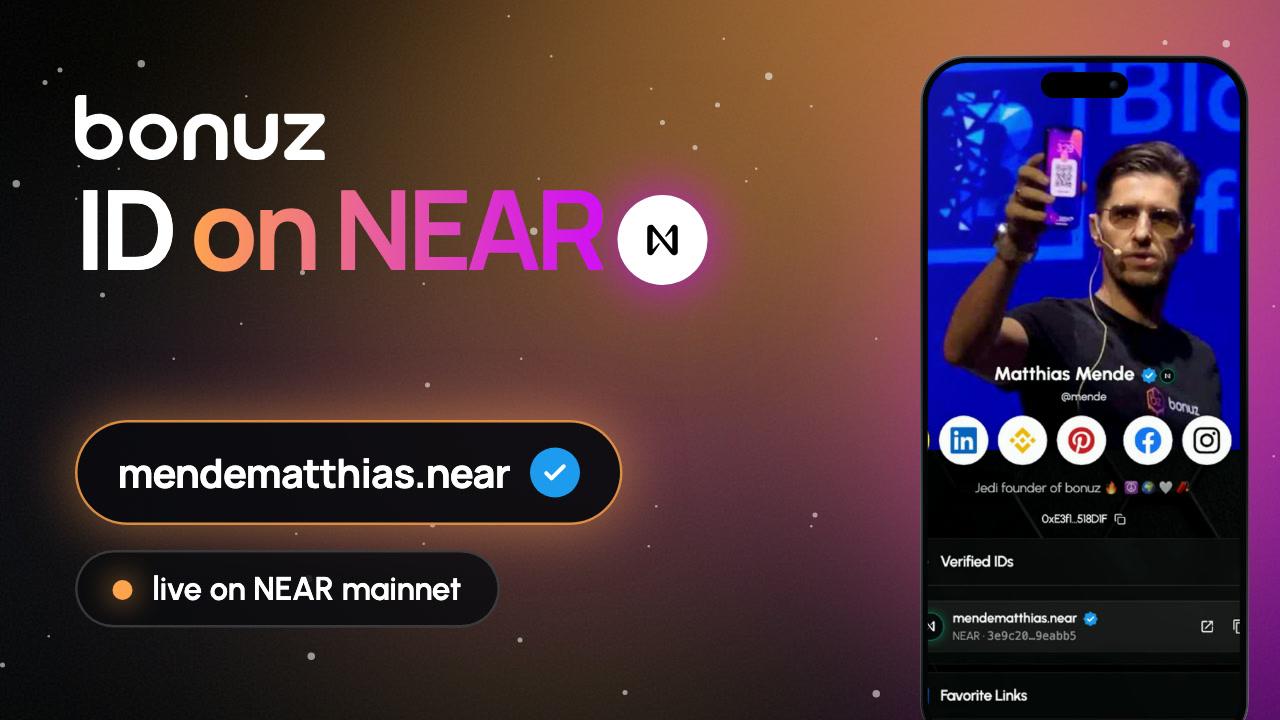
bonuz ID Verifies NEAR Wallet Names on Mainnet
bonuz ID can now verify a NEAR wallet name directly on NEAR mainnet, and anyone can check the link publicly. Long wallet strings make it hard to know who is on the other side of a payment. This update fixes that for everyday NEAR wallet holders.
What actually happened
The bonuz ID registry runs on NEAR mainnet at version 2.2.0, hosted at id.bonuz-id.near, according to the bonuz ID page. A verified NEAR wallet, for example mendematthias.near, now shows on its owner's bonuz ID page with a blue check and a NEAR mark, on phone and desktop. The wallet card inside the bonuz app also displays the name instead of the raw address. Anyone can query the registry directly, since the smart contract checks the wallet's signature itself before saving the link, with no bonuz staff approval involved. Only verified accounts that the owner chooses to keep visible appear publicly. The full feature ships in bonuz app version 4.5.0, submitted to the App Store and Google Play and currently under review.
How we got here
A 64 character wallet address has never told anyone whether they are paying a person, a company, or an automated agent. Earlier fixes, like per-chain name services, solved this one network at a time, leaving every chain with its own separate system. bonuz ID instead works across chains, tying a readable name to a wallet that a smart contract verifies, rather than a database a company controls, as shown in the bonuz ID repository. NEAR mainnet is the first chain live with this signature-based check, built during a NEAR hackathon.
Why this matters for you
For everyday NEAR wallet users, sending and receiving can now use a name instead of a long string, cutting the risk of pasting a wrong address. For builders, the open registry lets any app query who owns a verified NEAR account without trusting a middleman. For the bonuz ecosystem, readable wallet identity becomes a building block for payments, rewards, and AI agents that need to confirm who they are dealing with. Verification only proves control of a wallet key, not a real-world identity, so it is not KYC or a credit check.
The bigger question
If verified wallet names become the normal way people pay and get paid, does that count as a digital identity for everyday use, even though it only proves someone holds a key and reveals nothing else about them?
What to watch
bonuz app 4.5.0, carrying the full verified-name flow, is awaiting approval on the App Store and Google Play. bonuz has said more chains and name services will join the same bonuz ID page after NEAR. Readers can already test the live registry query from the project's GitHub repository or view a verified NEAR ID at bonuz.id/mendeCode.