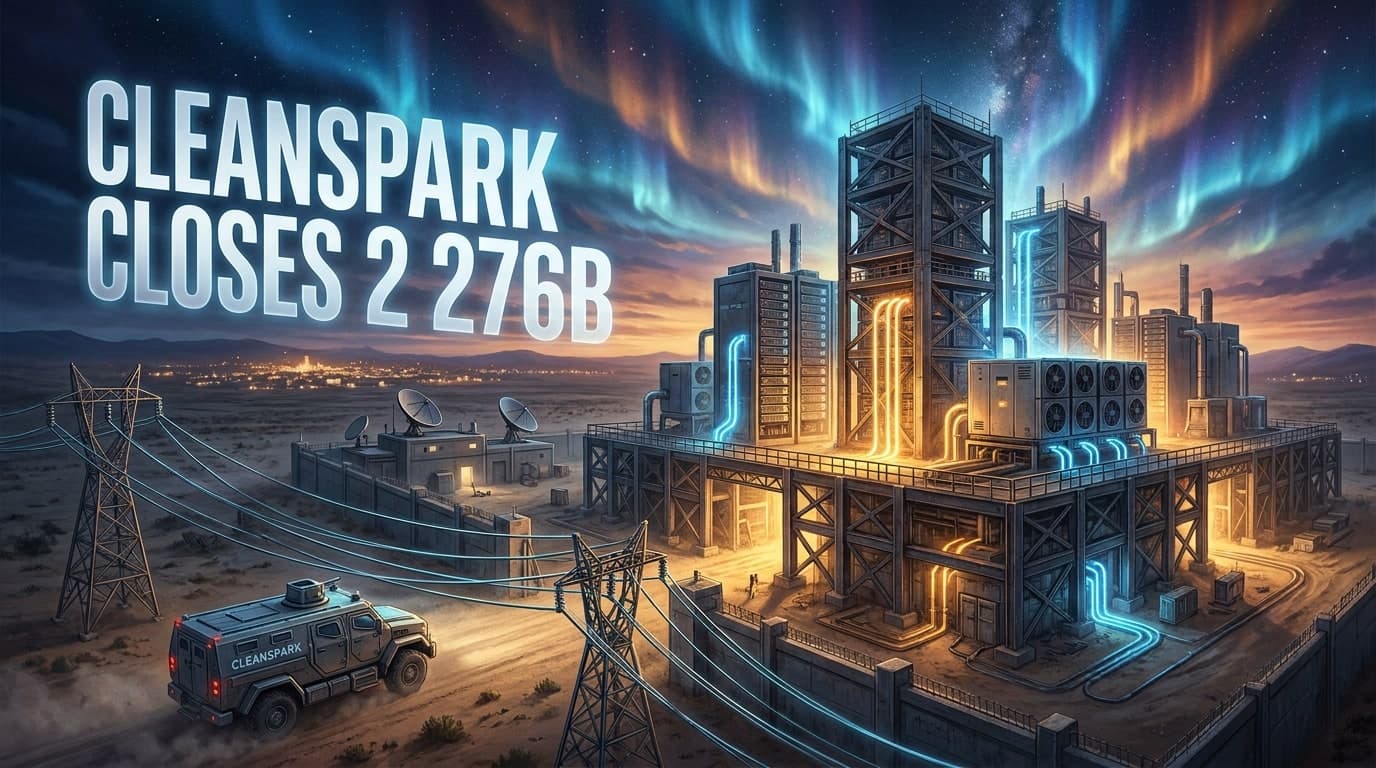
CleanSpark Borrows $2.276B for Georgia Data Center
CleanSpark just locked in $2.276 billion (USD) in debt to build a new data center in Sandersville, Georgia, backing bitcoin mining infrastructure at scale. Wallet holders should notice: this is real capital moving into the physical machines that keep bitcoin, and future compute networks, running smoothly.
What actually happened
CleanSpark, a publicly traded bitcoin mining company in the United States, closed a $2.276 billion (USD) debt deal for a data center in Sandersville, Georgia, according to The Defiant. The notes carry a 7.875% interest rate. Funds cover construction of the Sandersville site and repay equity CleanSpark already put into the project. The facility sits on a 20-year lease, the outlet reported. Missing from the record: the notes' maturity date, who holds the debt, the site's planned capacity, a finish date for construction, and whether the center will run mining rigs, other compute workloads, or a mix of both, the report noted.
How we got here
Bitcoin miners spend heavily on power, land and cooling before a single coin gets mined. Borrowing lets a company like CleanSpark build without selling more shares and diluting current investors. Equity markets have grown choosier about funding new mining capacity, pushing miners toward debt instead. A 20-year lease signals CleanSpark plans to stay put, not test the market short-term. The source material does not cover CleanSpark's earlier funding rounds or how this loan stacks against them, so direct comparisons aren't possible yet.
Why this matters for you
For anyone holding bitcoin, this deal alone won't move the price, but it shows real capital entering physical mining infrastructure. For CleanSpark investors, an approved $2.276 billion loan at 7.875% signals lender confidence, paired with a fixed repayment cost. For the bonuz ecosystem, it underlines a running theme: compute and power capacity, not chips alone, are what gate any large-scale hardware rollout, from mining rigs to future AR and smart glasses devices. For everyday wallet users, no immediate action is needed, but debt-backed infrastructure is worth tracking as it scales.
The bigger question
Will borrowed money become the standard way bitcoin miners fund giant data centers like this one, and what happens to that debt, and to the physical hardware behind it, if mining profits fall, energy costs climb, or facilities like Sandersville eventually get repurposed for other kinds of compute work, including the infrastructure future devices, such as AR and smart glasses, might eventually need?
What to watch
No completion date for the Sandersville facility, and no maturity date for the underlying notes, has been made public so far. Lender identities and the facility's planned capacity also remain undisclosed. Bonuz will keep watching how debt-funded data centers shape the power and compute backbone that tomorrow's devices, including AR and smart glasses, will eventually depend on.