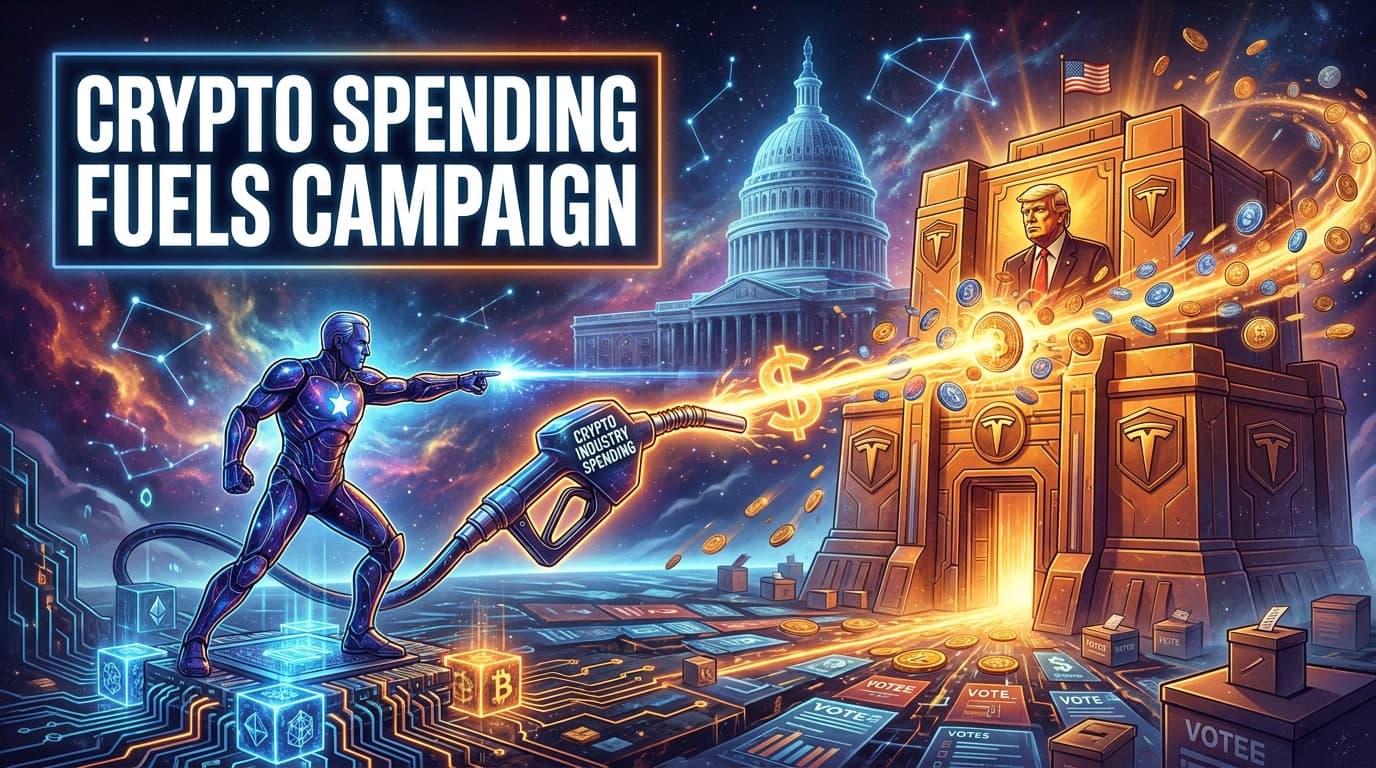
Crypto Spending Becomes a Midterm Attack Line in 2026
Crypto money meant to win friends in Washington is now fueling attack ads against it. In the 2026 US midterms, Democrats are targeting industry spending and President Trump's crypto earnings, not chasing crypto voters. That shift matters for anyone holding digital assets, because it could slow the regulation that shapes daily wallet use.
What actually happened
Former Ohio Senator Sherrod Brown said opposition spending from the 'crypto, data center crowd' hit $40 million (USD), mostly through the Fairshake political action committee, per CoinDesk. Fairshake spent at least $2 million (USD) against Florida candidate Oliver Gilbert in his primary. Virginia Senator Mark Warner's ad says Trump made 'hundreds of millions of dollars' from his memecoin, calling it 'grifting.' A Fox News poll this month found 88% of voters very concerned about government corruption, ranking above inflation and healthcare. The Center for American Progress says crypto interests gave almost $89 million (USD) to the MAGA Inc super PAC since 2024, and tracks Trump's personal crypto earnings near $2.4 billion (USD).
How we got here
Crypto groups bet heavily on Trump and Republican lawmakers in 2024, hoping for lighter regulation. Will Ragland of the Center for American Progress says that bet brought looser enforcement, but also tied the industry to Trump's personal finances, including memecoin profits and a Qatari jet gift cited in Warner's ad. Those ties now fuel a corruption narrative central to Democratic midterm messaging. The industry's top legislative goal, the Digital Asset Market Clarity Act, stalled in the Senate last month after Democrats demanded ethics rules Trump would not accept.
Why this matters for you
For everyday wallet users, stalled legislation keeps rules on stablecoins, exchanges and custody unsettled for longer. Builders, including wallet and hardware teams bonuz.market follows, face continued uncertainty over compliance standards. Groups like the Blockchain Association say they still court both parties, but spending data shows a heavy Republican tilt. If corruption becomes a defining midterm issue, crypto-friendly lawmakers could lose races, and Fairshake, the industry's largest super PAC, may need to rethink ads that already avoid the word 'crypto.'
The bigger question
Fairshake's ads never mention crypto, yet the industry's political ties are now a leading midterm attack line. Can heavy campaign spending still protect a young industry's agenda if public trust in its political relationships keeps slipping? Or does avoiding its own name only delay that reckoning? The answer could shape how crypto money moves through US politics for years, and how soon clearer rules reach ordinary users.
What to watch
Fairshake keeps spending against Sherrod Brown in Ohio, in a race that could become the costliest congressional contest in US history. Results arrive with the 2026 midterm elections. Senate action on the Digital Asset Market Clarity Act looks unlikely this year. Both outcomes will test whether crypto's political strategy holds, or backfires, shaping rules bonuz.market users rely on.