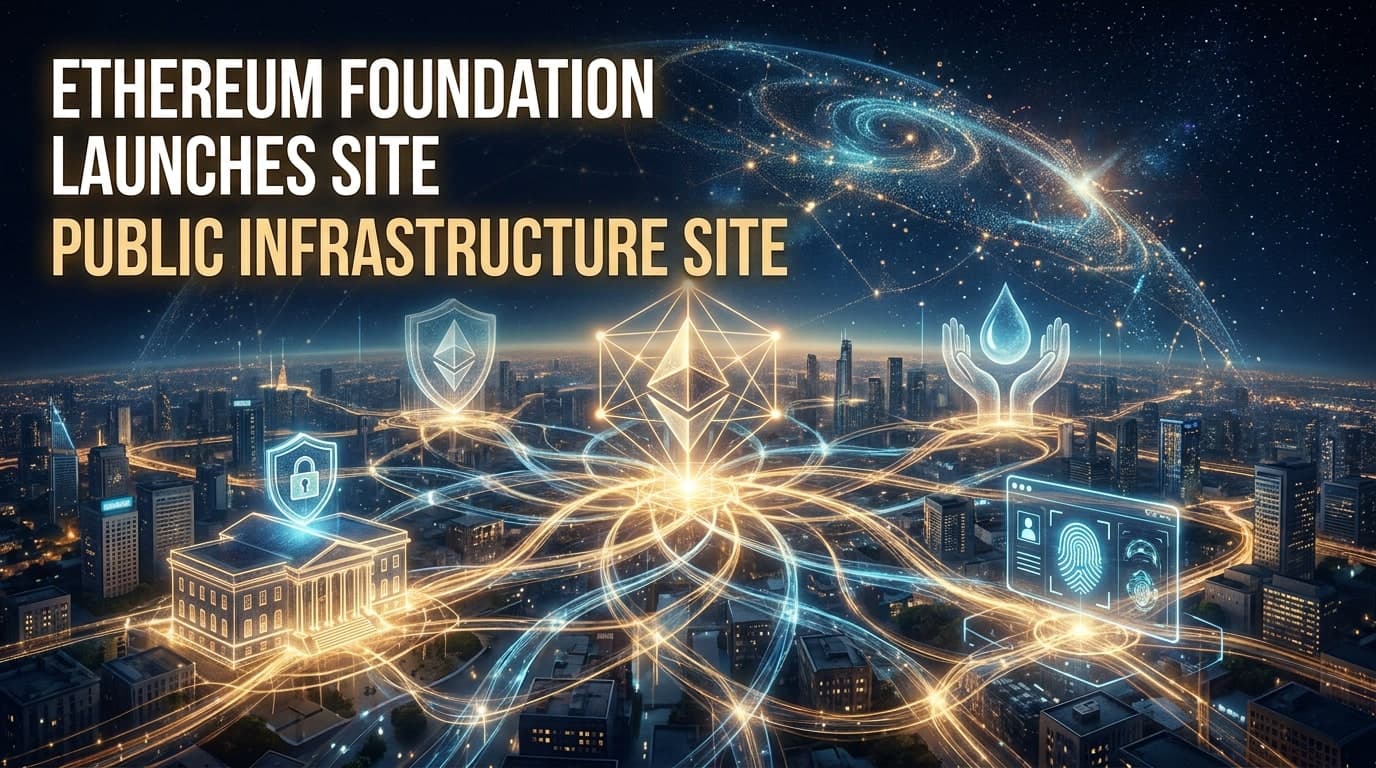
Ethereum Foundation Targets Government ID and Aid Systems
On 3 November 2026, the Ethereum Foundation launched a site aimed at governments and aid groups, not traders. It frames Ethereum as neutral public infrastructure for identity and aid. For anyone holding crypto in a wallet app, this points toward IDs and credentials sitting next to your tokens.
What actually happened
The new page, publicsector.ethereum.foundation, gathers explainers, case studies, and technical resources for public-sector and NGO audiences, according to the Ethereum Foundation Blog. It targets governments, multilateral organizations, and NGOs, not individual crypto traders. One case study details Bhutan's National Digital Identity system, where residents store credentials in personal wallets instead of a central government database. A shared on-chain registry lets approved services check that a credential is real without exposing personal data publicly. Separately, the Foundation's Technical Foundations team built a proof of concept letting humanitarian groups coordinate aid using decentralized identity and private payments, so no single agency needs to run the whole system or see everyone's records.
How we got here
Government blockchain pilots are not new, but most ran on private networks owned by one vendor or agency, creating lock-in risk. Citizens in those systems often could not switch platforms once locked in. Ethereum's public, permissionless network removes that single operator. Bhutan built its system partly because residents in remote mountain areas faced long, costly trips to reach services in person, so self-held credentials solved a real access gap. Aid groups raised a similar problem, wanting to coordinate overlapping programs without pooling sensitive beneficiary data into one shared database.
Why this matters for you
For everyday wallet holders, this signals that self-custody wallets could soon store more than tokens, think ID documents or aid eligibility credentials, under the same keys you already manage. For builders in the bonuz ecosystem, the published case studies offer a template for identity and credential features beyond payments or trading. For users in regions with limited banking or government access, wallet-based identity could lower the barrier to proving who you are. None of this is live for consumers yet, it is government and NGO focused for now.
The bigger question
If a government ID or aid record runs on a network no single company or agency controls, who is accountable when a credential fails, a service goes down, or a dispute arises? Shared, neutral infrastructure removes one point of failure, but it also blurs the line citizens and courts usually rely on. Can that trade-off work for everyday identity use?
What to watch
publicsector.ethereum.foundation is live now. The Technical Foundations team plans more case studies and technical write-ups on the humanitarian proof of concept. Expect more governments to publish their own case studies as talks continue. bonuz will watch whether any of this identity and credential work eventually reaches consumer wallet apps, including wearables and smart glasses.