Ethereum Moves Quantum Security Upgrade Up to 2027
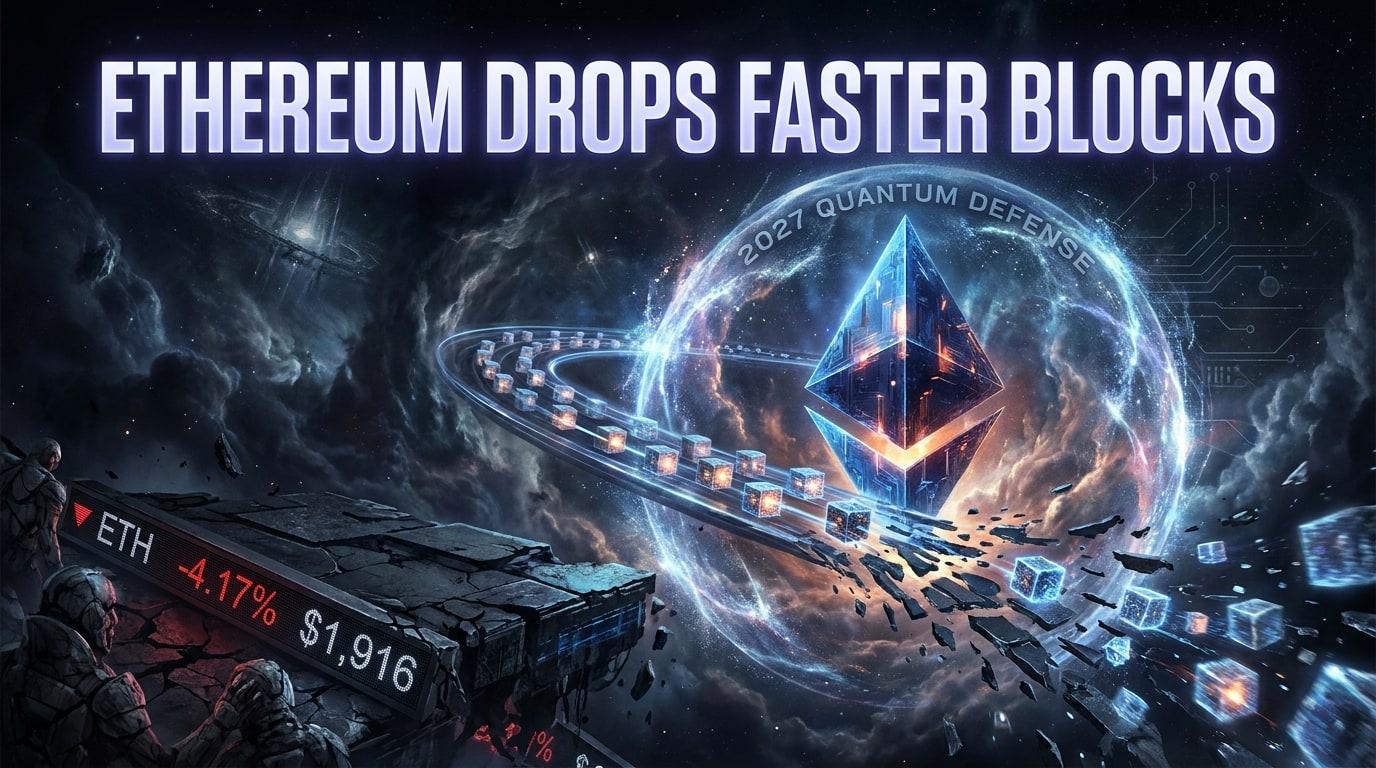
Ethereum's research team moved up its quantum-defense timeline to 2027, dropping a separate plan for faster blocks to make room for the work. The announcement landed the same day ETH dropped 4.17% to $1,916 (USD), a reminder that security roadmaps and price swings often collide for everyday holders.
What actually happened
Ethlabs, an Ethereum research group, posted its 'pqai27' roadmap on the Ethereum Magicians forum, moving the quantum and AI-threat resistance target from 2028 to 2027, according to Wu Blockchain. To fund that push, the team pulled support for Quick Slots, a proposal to shorten block times, and pushed that idea to 2028 instead. CoinDesk reports quantum-resistant accounts are meant to be ready in 2027, though wallet holders will still have to manually switch their signing method. Meanwhile ETH traded at $1,916, down 4.17% in 24 hours, swinging between $2,023 and $1,905. Trading volume hit $14.61 billion (USD), with market capitalization at $234.18 billion (USD).
How we got here
The 2028 quantum target was Ethereum's original plan, built on its usual habit of favoring security groundwork over speed features. Ethlabs now argues quantum computing and AI-driven attacks are moving faster than the network anticipated, so hardening comes before performance. This follows a year of custody and stablecoin shifts, including Coinbase's trust-bank charter and new bank-backed stablecoin launches, all leaning on the same security guarantees Ethereum is racing to build at the base layer.
Why this matters for you
For everyday wallet users, including bonuz app holders, the practical change is a future signing-method update tied to quantum-resistant accounts, something to watch for rather than act on today. Builders now know faster blocks wait until 2028, while account security moves first. For leveraged holders, the price dip adds real risk: treasury firm BTCS sold ETH at a loss to protect a $64 million (USD) Aave loan, with liquidation pressure building near $1,700. Yield-focused users are eyeing alternatives like Sygnum's ETH Alpha Fund, aiming for 8% to 10% annual returns through staking, options and arbitrage.
The bigger question
Does delaying speed upgrades to harden against quantum computing protect Ethereum's long-term trust, or does it hand an edge to faster rivals in the meantime? Nobody can confidently predict how fast quantum computing will actually mature, or how quickly wallets, including everyday consumer apps, will roll out new signing methods once they're required.
What to watch
The pqai27 roadmap still needs community review before it becomes official. Quantum-resistant accounts target 2027, with faster blocks now set for 2028. Watch for wallet providers, bonuz included, to detail signing-method migration plans. OKXICE, a tokenized securities venue, launches 23 November 2026, offering an early test of how institutional crypto infrastructure handles these same security questions.