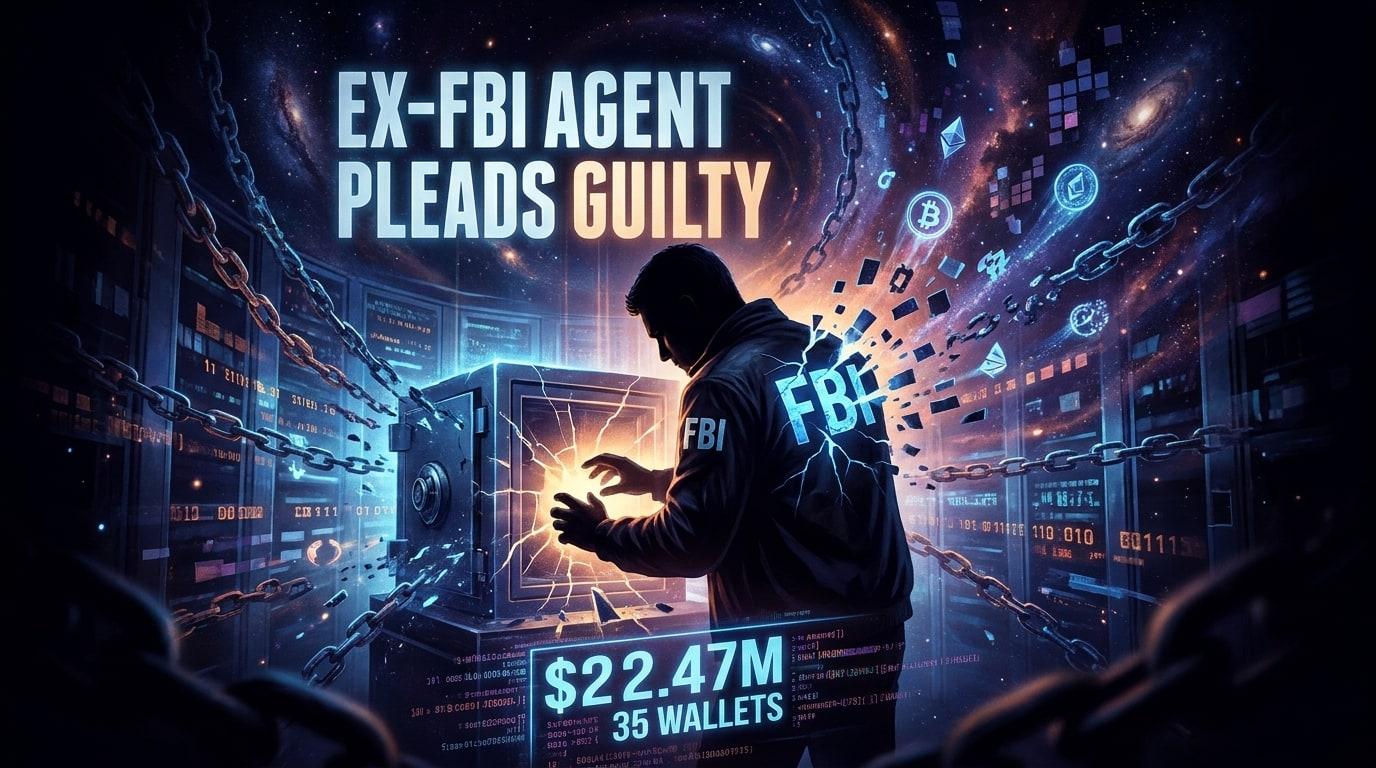
Ex-FBI Agent's Guilty Plea Exposes Wallet Security Gaps
A former FBI agent admitted in court to taking $2.47 million (USD) in crypto from wallets linked to 35 separate investigations. If federal custodians cannot keep seized funds safe, everyday wallet holders should ask harder questions about who really controls their keys.
What actually happened
According to The Block, the former agent, Yaroch, pleaded guilty to stealing $2.47 million (USD) in cryptocurrency from wallets connected to 35 separate investigations. Under the plea agreement, he must repay at least $2.4 million (USD) in restitution. He also agreed to give up any future profits earned from telling his story in books, interviews, or film. The Block noted the report does not specify exact theft dates, the court handling the case, or any statement from the FBI. A sentencing date has not been announced. The case shows that even wallets controlled by federal investigators are not immune to insider theft.
How we got here
Crypto seized as evidence usually sits in wallets controlled by investigators until a case closes or a court orders forfeiture. Yaroch's reach spanned 35 separate investigations, pointing to broad custodial access rather than one isolated case. Public reporting does not yet reveal when the thefts started, how long they lasted, or which specific cases lost funds. Those gaps matter because wide-ranging access like this suggests a systemic control problem, not a single lapse. Court filings in the coming weeks should fill in more of the timeline as the case moves toward sentencing.
Why this matters for you
For everyday wallet users, this case is a plain reminder: whoever holds the private keys controls the funds, badge or no badge. It strengthens the case for self-custody and transparent, auditable wallets over blind trust in any custodian, government or private. For bonuz.market users, it underlines why non-custodial tools and clear on-chain visibility matter more as digital assets become routine evidence in legal cases. For institutions and investigators, expect pressure to add multi-signature controls and access logs for seized crypto. For builders, demand should grow for tamper-evident custody software that tracks every wallet touch.
The bigger question
If a trained federal agent could quietly drain wallets tied to 35 cases, what controls actually protect any seized crypto today, and who checks them? The open question is bigger than one agency: can any institution, public or private, prove that digital assets it holds for others stay completely untouched?
What to watch
No sentencing date has been set yet. Watch for court filings confirming the $2.4 million (USD) restitution schedule and any public statement from the FBI on how it secures seized crypto going forward. More details on the 35 affected investigations may surface as related cases proceed through court.