FTC Sues Amazon Over Alleged Ad Auction Price Rigging
US regulators sued Amazon on 31 August 2026, claiming it quietly raised prices in its ad auctions since 2019. Anyone who shops online could be paying for it, since sellers often pass higher ad costs into product prices.
What actually happened
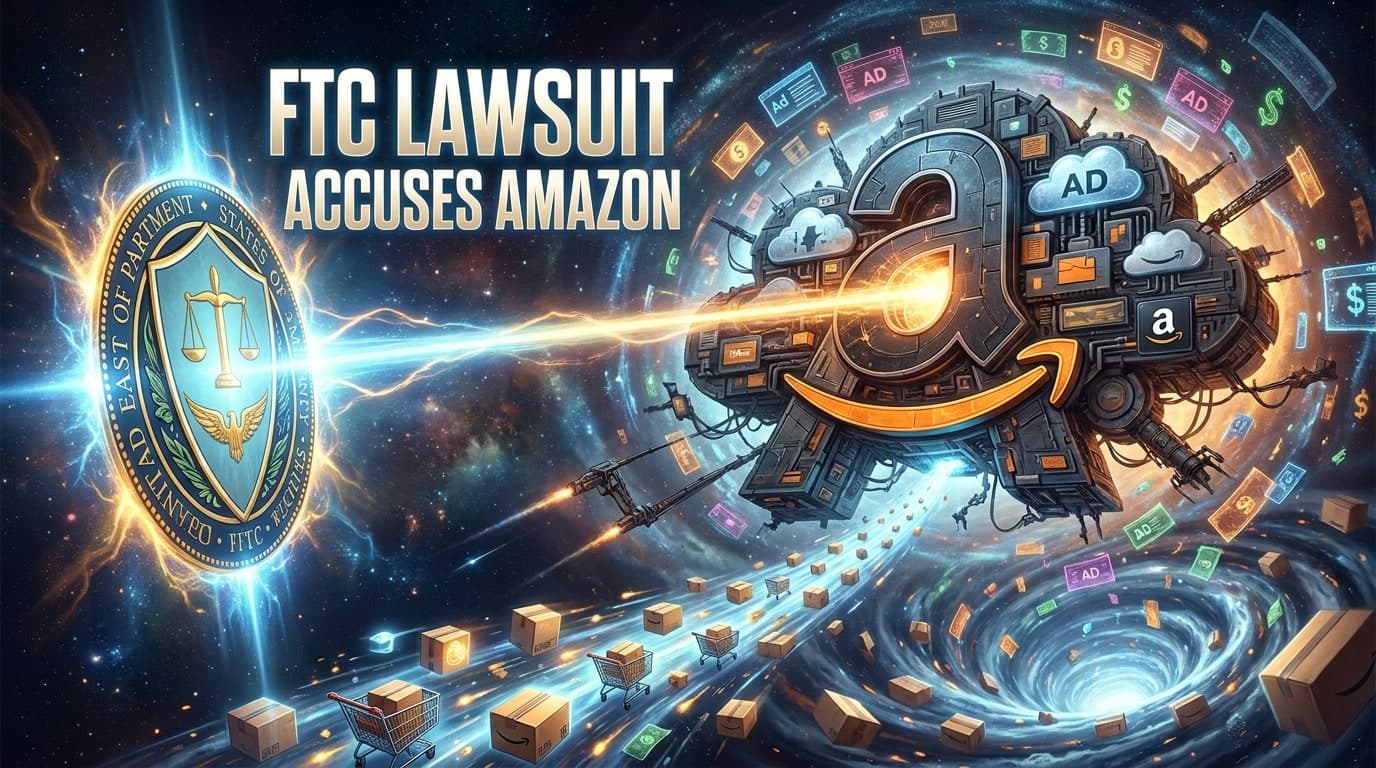
The FTC and 22 state attorneys general filed the complaint on 31 August 2026, reports The Verge. In a normal second price auction, the winner pays one cent above the runner up bid. The FTC says Amazon swapped that figure for a higher one set internally by its own ad unit. FTC chairman Andrew Ferguson said the extra cost was 'largely passed on to American consumers.' Regulators claim Amazon 'has likely illegally extracted over 20 billion dollars' from advertisers, more than $20 billion (USD). Amazon called the suit 'misguided,' noting average winning bids for Sponsored Products fell 50% between 2019 and 2024.
How we got here
This is Amazon's second major FTC clash in two years. Roughly a year earlier, Amazon paid $2.5 billion (USD) to settle claims that it made Prime cancellations deliberately difficult. Amazon Ads has since grown into a top rival to Google and Meta for ad budgets. The complaint cites an internal Amazon Ads executive who reportedly called the auction's second price a 'proxy,' something the company calculated rather than a price an actual bidder set.
Why this matters for you
For anyone paying with a crypto wallet or a card on an online marketplace, ad costs baked into seller pricing matter regardless of the payment rail used. If sellers pass Amazon's ad fees into product prices, everyday buyers, including bonuz users shopping through connected apps, feel it indirectly. Builders working on wallet linked commerce tools should note that regulators are now testing how transparent auction pricing must be, a standard that could shape future marketplace and ad integrations across Web3 platforms too.
The bigger question
Amazon's auction promised bidders would never pay more than necessary to win. Regulators say that promise was quietly broken. If one platform can override its own stated pricing rules, what does that mean for trust in every auction based system, from ad markets to token sales, that claims to set prices fairly?
What to watch
No trial date exists yet. Amazon and the FTC are expected to file responses in coming months. The 22 state attorneys general may pursue parallel state cases. Discovery could surface further details on how Amazon Ads actually priced its auctions.