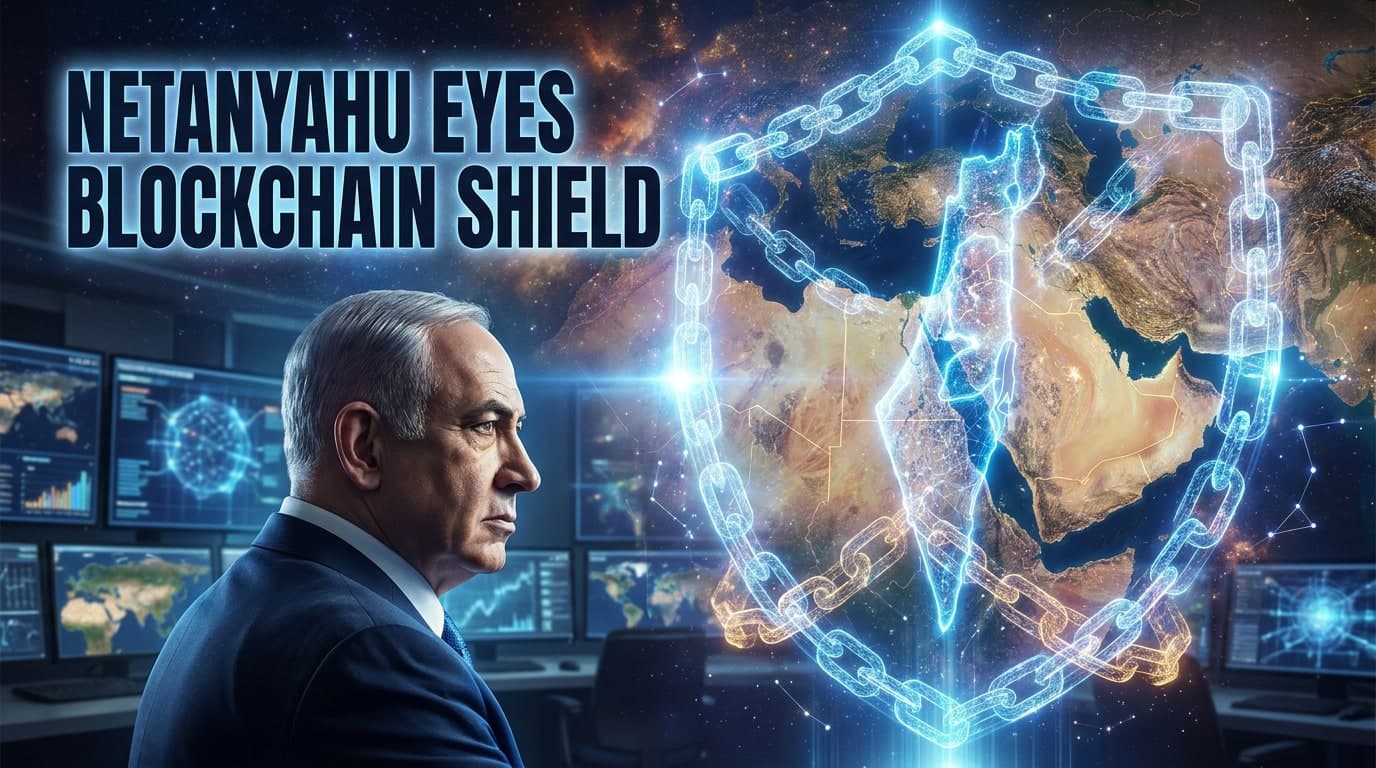
Netanyahu Floats Blockchain to Shield Israel's Banks
Israel's Prime Minister Benjamin Netanyahu said blockchain tech might help the country's banks withstand future sanctions. When a sitting head of government talks about blockchain as a shield for banking access, everyday wallet users get an early preview of crypto's expanding role in daily life.
What actually happened
According to The Block, published on 23 October 2026, Netanyahu raised blockchain as a possible buffer if sanctions ever hit Israel's banking system. The report names no specific blockchain network, government office, or budget. There is no direct quote from Netanyahu, no policy paper, and no timeline given. The outlet does not describe the current sanctions risk facing Israeli banks or say who might impose them. No pilot program or regulator has been named publicly. The statement reads as an early signal, not a finished plan. No Israeli ministry or central bank has confirmed or expanded on it since.
How we got here
Governments have weighed blockchain rails against sanctions risk before, usually in economies worried about losing access to dollar based payment systems. Netanyahu's comment fits that pattern, but the report does not explain the timing or say whether Israel faces an active sanctions threat right now. The Block's article remains the only public record of the remark. No follow-up has come from Israel's finance ministry, its central bank, or any other agency, so the comment currently stands alone, without official detail.
Why this matters for you
Nothing changes today for wallet holders. But if a government starts treating blockchain as backup banking infrastructure, that normalizes stablecoins and on-chain settlement for ordinary payments, not just trading. For bonuz.market users, it is a reminder that wallet based tools could one day serve as a fallback when traditional banking access gets restricted. For builders, a national leader's interest hints at future demand for compliant payment rails, beyond speculative tokens.
The bigger question
If a sanctioned or soon to be sanctioned economy leans on blockchain for banking access, does that prove the technology can stay neutral, or does it invite tighter scrutiny from the governments imposing the sanctions in the first place? The answer could decide whether wallet users can ever trust crypto rails to stay separate from politics.
What to watch
No official timeline exists yet. Netanyahu's office has not named an agency, released a proposal, or set a date for further details. Watch for statements from Israel's finance ministry or central bank, and for follow-up reporting from The Block. bonuz.market will keep tracking how government level blockchain interest could affect everyday wallet users.