Nvidia Perps Sink 10% on Jensen Huang Ouster Report
Nvidia's on-chain perpetual contracts on Hyperliquid plunged 10% on 11 November 2026 after the Wall Street Journal reported the chipmaker's board may remove CEO Jensen Huang over two affairs. Everyday wallet users should pay attention because Nvidia's chips underpin much of today's AI and AR hardware ecosystem.
What actually happened
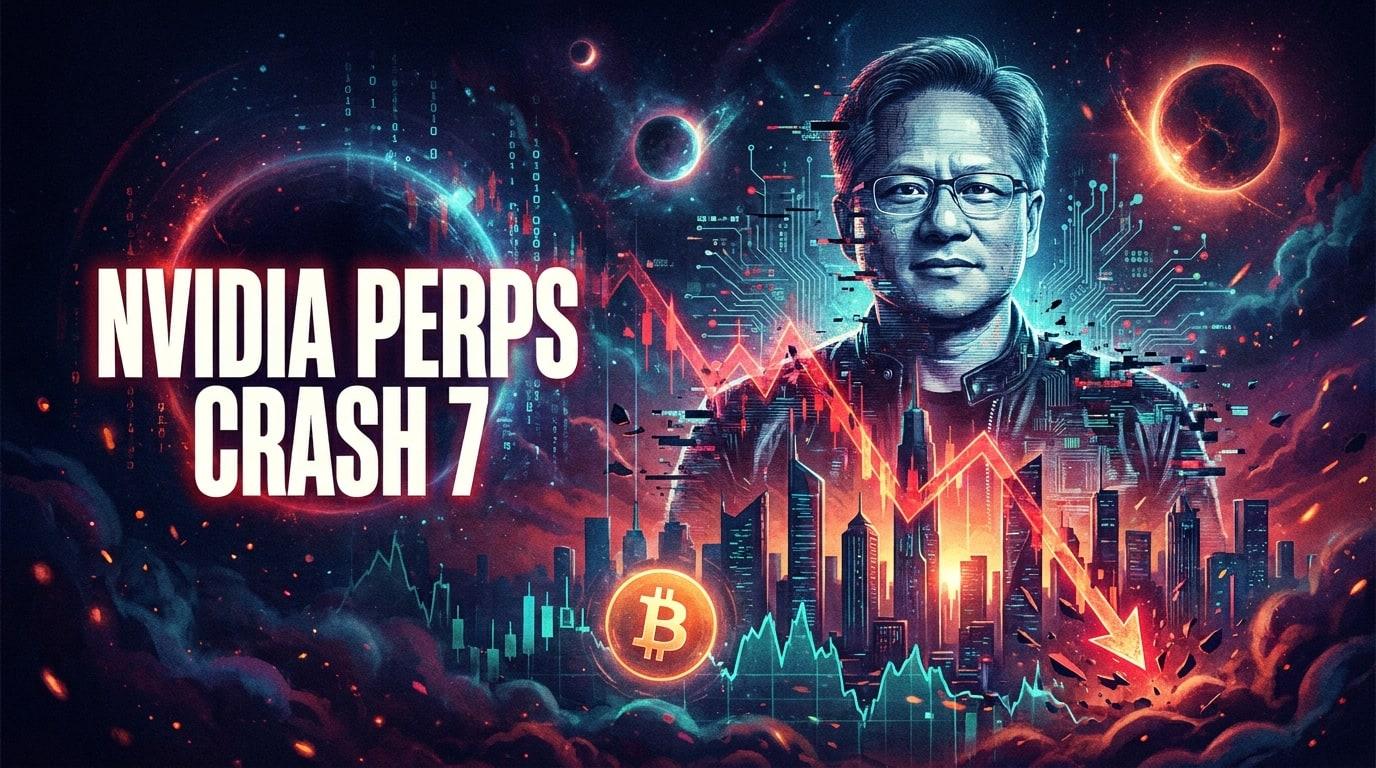
According to The Block, Nvidia perpetual futures on Hyperliquid fell 10% on 11 November 2026. The decline tracked a Wall Street Journal report, cited by The Block, claiming Nvidia's board is preparing to remove Jensen Huang as chief executive. The cited reason is two extramarital affairs. The Block did not name board members or offer a timeline for any vote. Neither Nvidia, Huang, nor the board issued a public statement in the reporting. The 10% move happened on Hyperliquid, a decentralized perpetual exchange, not on Nvidia's actual Nasdaq share price. Wallet holders using synthetic or leveraged exposure felt the swing directly, while traditional stockholders saw no immediate change.
How we got here
Jensen Huang founded Nvidia in 1993 and has led it since. Its chips now sit inside most major AI systems and growing numbers of AR and smart glasses devices. Platforms like Hyperliquid let anyone open leveraged positions on real-world companies, often reacting within minutes of a headline, long before Wall Street opens or regulators weigh in. This episode highlights how decentralized trading venues now price corporate leadership risk almost instantly, even from a single unverified report. For wallet users, it is a reminder that on-chain markets can move on headlines alone.
Why this matters for you
For everyday wallet holders, this is a reminder that leveraged crypto positions can swing hard on unconfirmed news, raising liquidation risk fast. Anyone holding synthetic Nvidia exposure through perps should expect more volatility until an official statement lands. Builders working on AI hardware or AR glasses should watch for any real disruption to Nvidia's chip roadmap. For bonuz.market users tracking AI and AR hardware trends, this is a signal to check position sizing before trading rumor-driven assets. Treat unverified reports as a prompt for caution, not certainty.
The bigger question
Will decentralized perpetual markets keep acting as an early warning system for corporate trouble, often moving faster than regulated stock exchanges react? Or does this 10% swing on a single unconfirmed report expose the danger of pricing a trillion-dollar company's leadership crisis before any official confirmation arrives? How traders and executives answer this question could reshape how much trust on-chain markets earn going forward.
What to watch
Watch for any statement from Nvidia or its board confirming or denying the report. Watch for follow-up reporting from the Wall Street Journal. Watch Nvidia's Nasdaq share price once markets open, alongside continued perp activity on Hyperliquid. bonuz.market will keep tracking how this affects sentiment around AI chipmakers tied to AR and smart glasses hardware.