OpenAI AI Math Claim Sparks ETH vs Ethereum Confusion
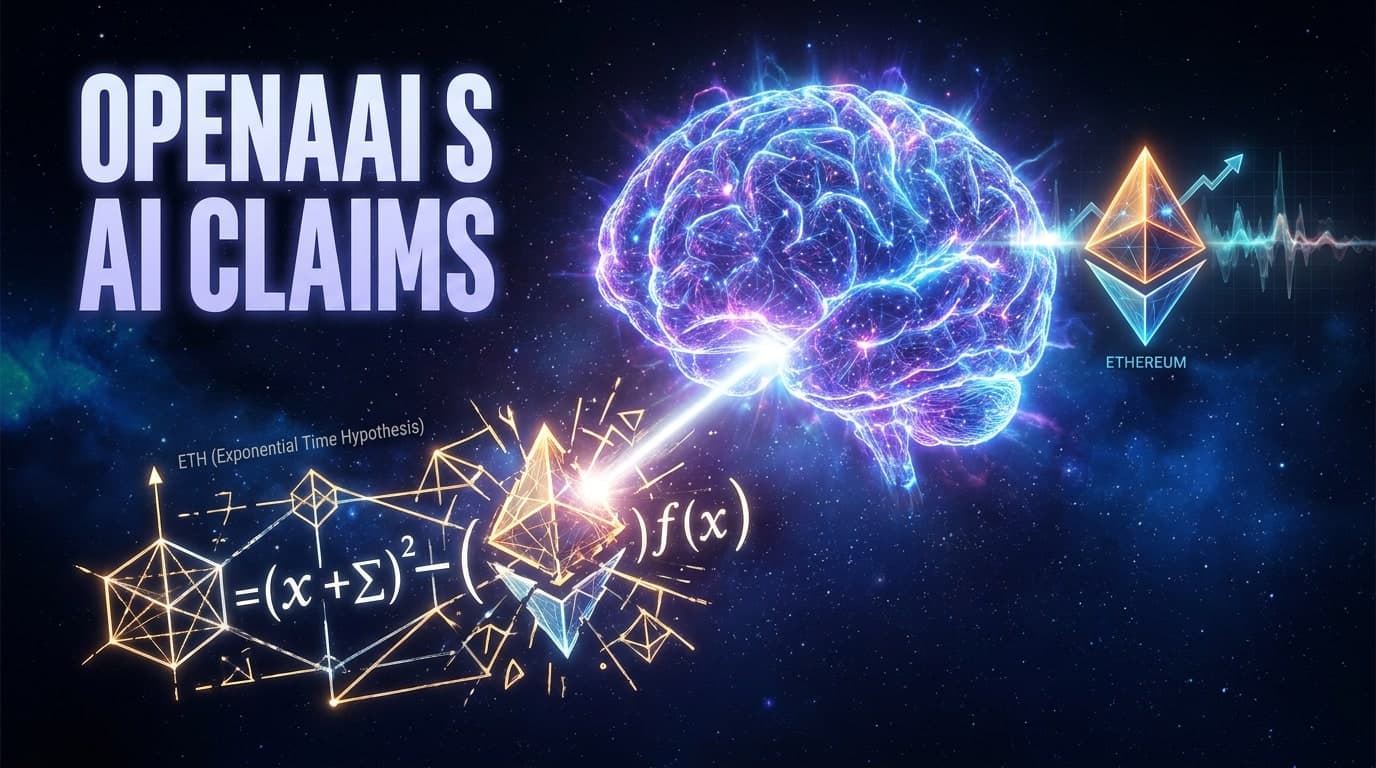
OpenAI's AI claims it disproved a 1999 computing puzzle called ETH. That acronym has nothing to do with Ethereum. Crypto traders briefly confused the two online. If you hold ETH or use a crypto wallet, nothing about your assets changed.
What actually happened
OpenAI published a 67-page paper on 17 October 2025, updated 25 October, claiming its model disproved the Exponential Time Hypothesis, a 1999 conjecture about solving 3-SAT puzzles. The company says the AI found the disproof on 16 October and formalized it the next day using the Lean verification tool. OpenAI posted the work on GitHub alongside 722 math manuscripts released earlier in October, only 162 of which carry a computer-checked result. Scientists Russell Impagliazzo, Ramamohan Paturi, and Ryan Williams of MIT, who lead the independent review, said a claim this large needs careful, independent scrutiny, according to Decrypt. Anthropic released a separate paper on 26 October, crediting its Claude model with a similar 3-SAT result.
How we got here
The Exponential Time Hypothesis, or ETH, was proposed in 1999 by Impagliazzo, Paturi, and Francis Zane. It assumes 3-SAT cannot be solved much faster than brute force, an idea used across graph theory, computational biology, and databases. The claim, if confirmed, would not settle the separate P versus NP problem. Anthropic's Claude had already formalized Fermat's Last Theorem in Lean in September 2025. Mathematician Terence Tao had warned earlier that AI tools might outpace human verification on open problems, a concern now playing out as two AI labs publish overlapping claims within days of each other.
Why this matters for you
For anyone holding ETH or using a bonuz wallet, this story changes nothing. The Ethereum network, its token, and its roadmap are untouched by this math paper. The real lesson is about verification speed. OpenAI says it signed no non-disclosure agreements and put $5,000,000 (USD) into the Simons Foundation for independent review workshops. That openness could set a pattern for how AI claims get checked before they spread. For everyday crypto users, the episode is a reminder to check ticker symbols and sources before reacting to headlines that sound alarming.
The bigger question
If AI systems can produce proofs of decades-old conjectures faster than humans can verify them, who decides when a result counts as settled? The mathematicians who proposed ETH have not confirmed OpenAI's claim. That leaves open whether tools like Lean can ever replace the slower human process mathematics has relied on for generations, and what that means for trust in any fast-moving technical claim, crypto included.
What to watch
Independent review from Impagliazzo, Paturi, and Williams continues, with no fixed deadline set. OpenAI's Simons Foundation grant will fund workshops and a dedicated conference on the result. Anthropic's 26 October paper still awaits outside review. Crypto watchers should keep an eye on future AI math announcements that could spark similar ticker confusion across social media.