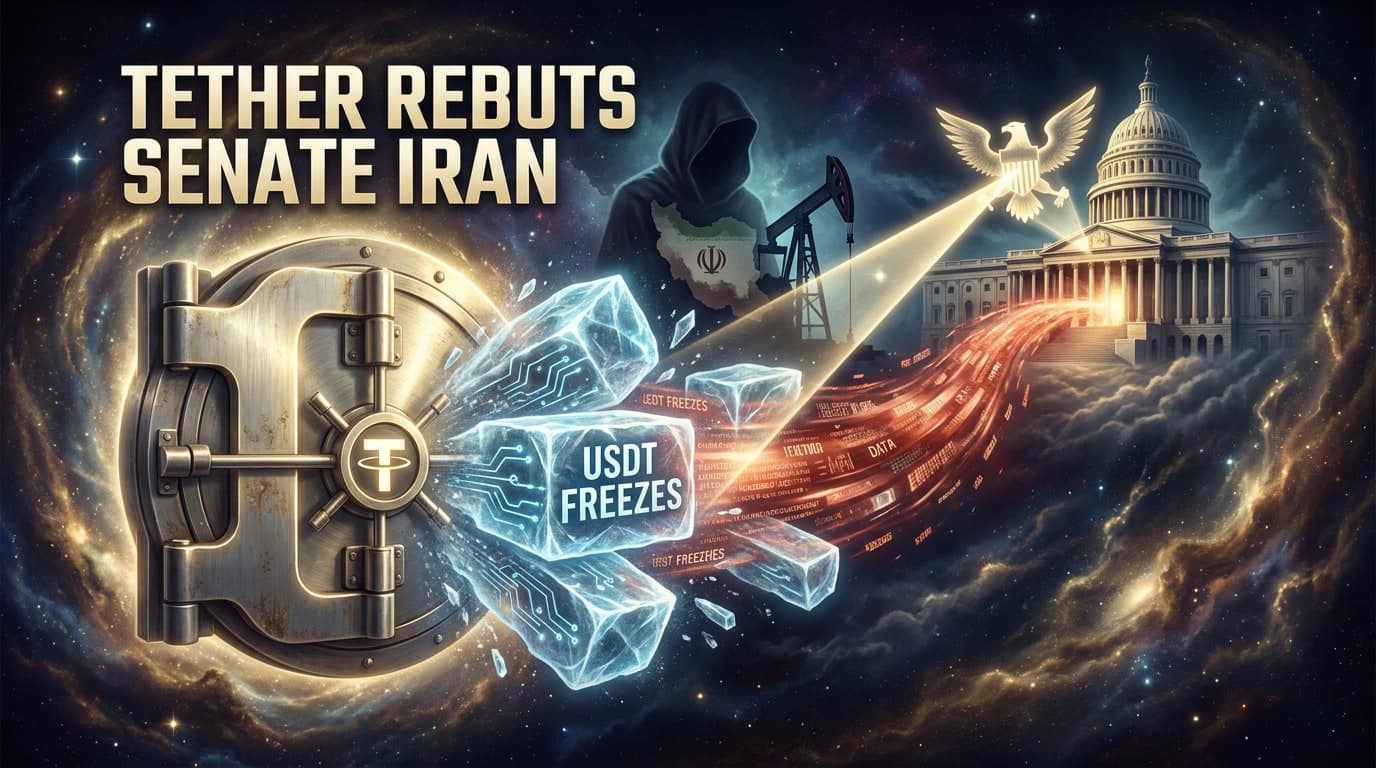
Tether Pushes Back on Senate Iran Report Over USDT Freezes
Tether CEO Paolo Ardoino pushed back on 19 October 2026 against a US Senate report alleging the stablecoin issuer helped Iran dodge sanctions. He says Tether froze wallets weeks before regulators acted. Anyone holding USDT in a wallet should care, since this fight could shape how safe and usable the token stays.
What actually happened
On 19 October 2026, Ardoino wrote on X that since 2023, Tether froze suspicious addresses on average 4 weeks before the US Treasury's OFAC and Israel's NBCTF issued formal sanctions, according to CoinDesk. He said 99% of those freezes happened before blockchain analytics firm Chainalysis even flagged the addresses. Ardoino linked this work to a 94% drop in Iran-linked stablecoin volumes. Speaking remotely at DC Fintech Week days earlier, he criticized the Senate for releasing its findings to media before Tether could respond. "I believe it's important for the public also to hear our side of the story," he said. The report came from Senator Richard Blumenthal, the top Democrat on the Senate Permanent Subcommittee on Investigations, who accused Tether of acting as "a significant financial lifeline within Iran's shadow banking network."
How we got here
Blumenthal's report focused on the period before 2024, when it said Tether had not systematically frozen flagged wallets, letting groups such as Hamas shift from bitcoin into USDT. A separate CoinDesk investigation detailed a $344 million (USD) USDT freeze tied to US action against Iran's government. Blumenthal has since widened his probe to cover Tether's ties with Cantor Fitzgerald, a firm close to the Trump administration. Tether itself named Bo Hines, formerly Trump's White House crypto adviser, to lead its US division last autumn.
Why this matters for you
For everyday USDT holders, including those using bonuz wallet tools, this dispute decides whether the token keeps smooth banking rails and exchange access. If regulators side with Blumenthal, stablecoin issuers could face stricter freeze-reporting rules, possibly slowing transfers. If Tether's compliance timeline holds up, it strengthens the case that USDT stays usable for daily payments without added friction. Builders adding USDT to apps should watch which standard, speed before sanctions or formal listing only, becomes the regulatory baseline.
The bigger question
Should stablecoin issuers be judged by how fast they act before official sanctions land, or only by whether they follow formal lists once governments issue them?
What to watch
Track Blumenthal's expanding inquiry into Tether's ties with Cantor Fitzgerald. Prediction market Kalshi shows growing odds that Democrats retake the Senate in upcoming elections, a shift that would widen Blumenthal's oversight power. No new hearing date has been set yet.