Tokenized Stocks Face Pushback From Nine Public Firms
Nine publicly traded companies have pushed back against having their shares tokenized on crypto exchange OKXICE. For anyone holding or considering stock-linked crypto tokens, this dispute shows those assets may not carry the backing or rights investors expect.
What actually happened
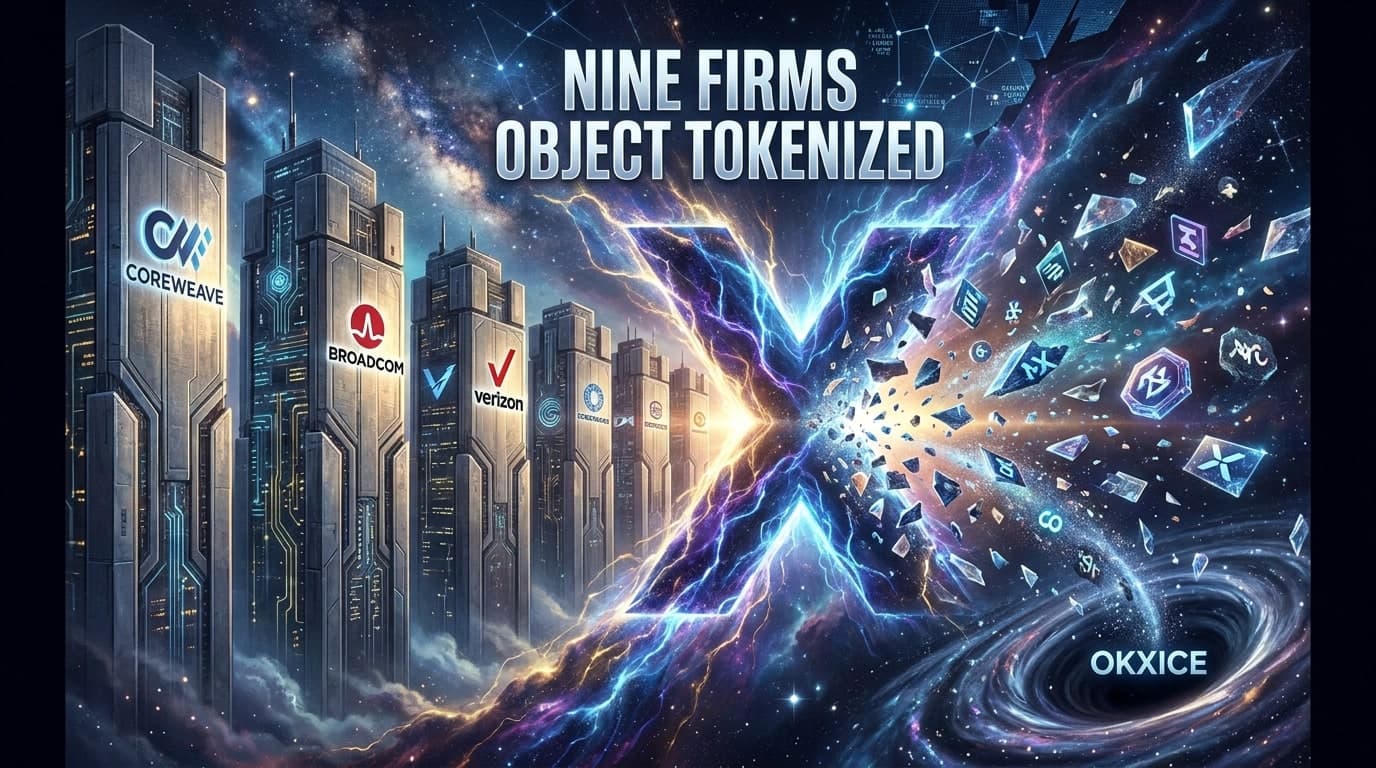
The Block reported on 17 October 2026 that nine public companies, including CoreWeave, Broadcom, and Verizon, object to tokenized trading of their shares on crypto exchange OKXICE. Applied Optoelectronics, a publicly traded optical components maker, told the Wall Street Journal it opposed the tokenization because it could not predict the effect on its stock price, liquidity, and volatility, according to The Block. The Block's report did not name all nine objecting companies. No statement from OKXICE, CoreWeave, Broadcom, or Verizon appeared in the reporting reviewed for this article. It remains unclear whether the exchange plans to proceed with the listings despite the objections.
How we got here
Tokenized stocks let exchanges mint digital tokens meant to track a company's share price, sometimes without any direct agreement with that company. OKXICE is one of several platforms pushing into this space as demand grows for stock exposure inside crypto wallets. Applied Optoelectronics, tied to data center and networking demand, is the first named firm to detail its concerns publicly. Its complaint echoes a wider worry among issuers who have no formal role in how their shares are represented once listed on crypto exchanges.
Why this matters for you
For everyday wallet users, a tokenized share is not the same as owning real stock. It may carry no shareholder rights, no dividends, and no guaranteed liquidity if the issuer objects. If more companies push back, exchanges could delist these tokens quickly, leaving holders with assets they cannot easily exit. For users who track multiple asset types through a wallet like bonuz, it is a reminder to check whether a token actually grants legal ownership before trading it. Exchanges and builders offering equity-linked tokens may soon need direct licensing agreements to avoid the same pushback.
The bigger question
Should a crypto exchange need a public company's consent before offering tokenized versions of its stock? The answer could decide whether tokenized equities grow into a trusted, wallet-ready asset class, or stay a legally uncertain product that sits outside regulated markets, shareholder protections, and company oversight. It is a question regulators, exchanges, and everyday holders will all need answered.
What to watch
OKXICE has not publicly responded to the objections so far. Watch for whether CoreWeave, Broadcom, or Verizon issue their own statements in the coming weeks. Also watch for regulatory commentary or a policy update from OKXICE on tokenized equities. bonuz.market will track how any changes affect wallet-accessible tokenized stock products.