Vitalik Confirms Ethereum Privacy Push With New EIPs
Ethereum's founder says privacy tools long treated as distant roadmap items are now written into concrete code proposals. Anyone holding ETH, building wallets, or using tokenized assets should notice, because this reshapes how transactions get confirmed and who can see them on-chain.
What actually happened
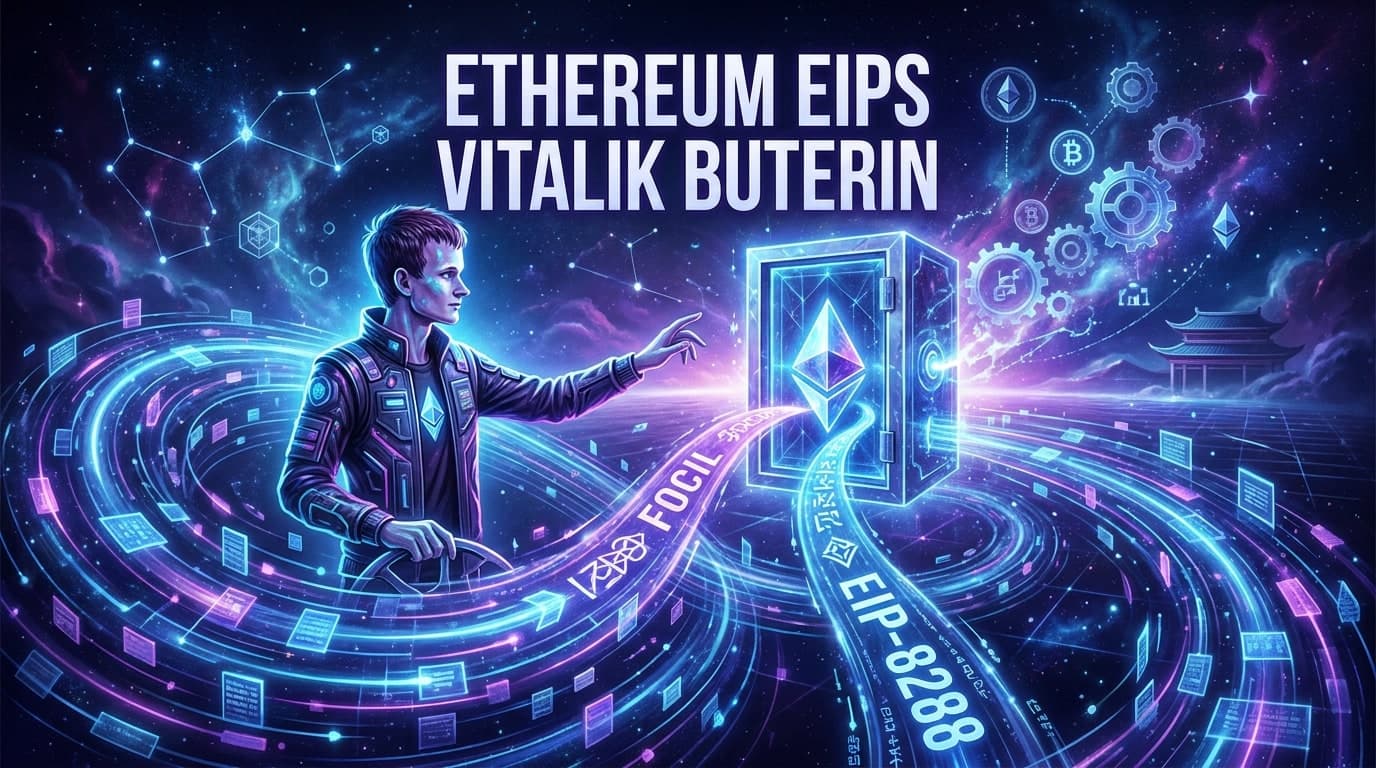
At the 12th Global Blockchain Summit in Shanghai on 24 September 2026, Vitalik Buterin said Ethereum's move toward zero-knowledge proofs is 'no longer part of the far-future roadmap. They are now EIPs,' per Wu Blockchain. He pointed to EIP-8288, which checks large proof batches off-chain before a block forms, and FOCIL, which relies on 16 inclusion-list creators plus one builder per slot. Both are slated for the H-Star fork, roughly two years out, maybe sooner with AI help. Buterin repeated Zcash founder Zooko's line that public chains work 'like Twitter for your bank account,' framing why privacy matters. ETH traded at $2,692 (USD), up 0.80% over 24 hours, ranging $2,662 to $2,740 on $15.88 billion in volume, according to CoinGecko.
How we got here
Ethereum has floated zero-knowledge features for years without a firm timeline. This year, real products caught up to the talk. The Defiant reported a draft letting confidential real-world-asset tokens hide amounts while still allowing issuer oversight. Around the same window, Aave's V4 deployment on Base began taking tokenized Apple, Nvidia, and Tesla shares as loan collateral, and ARK opened a tokenized venture fund on Ethereum with a $500 minimum through Securitize. Arbitrum also swapped its Timeboost auction for per-transaction priority bidding, routing 97% of proceeds to its DAO treasury.
Why this matters for you
For everyday wallet holders, nothing changes at the app layer yet, but the direction is clear: private balances and compliant tokenized assets are becoming normal Ethereum features, not side projects. Builders integrating with bonuz wallets get a firmer target for guaranteed inclusion and cheaper proof checks once EIP-8288 and FOCIL land. Anyone holding tokenized RWAs or using Arbitrum apps should watch fee mechanics shift, since treasury income now depends on per-transaction bidding rather than time auctions.
The bigger question
Buterin frames programmable cryptography as letting Ethereum control who sees what, not just who can send what. Does that make permissioned, compliance-heavy assets fit naturally on a public chain, or does it push public blockchains toward looking like the private networks they were meant to replace? That balance will shape how much institutional money moves onto Ethereum next.
What to watch
The H-Star fork carrying EIP-8288 and FOCIL sits roughly two years out per Buterin's Shanghai talk. Arbitrum's per-transaction auctions are already running. ARK's tokenized fund stays open for subscriptions through Securitize, with quarterly buyback windows. Ethereum's confidential RWA draft remains unfinished. Bonuz.market users tracking wallet-level changes should watch for further RWA and layer-2 fee updates.