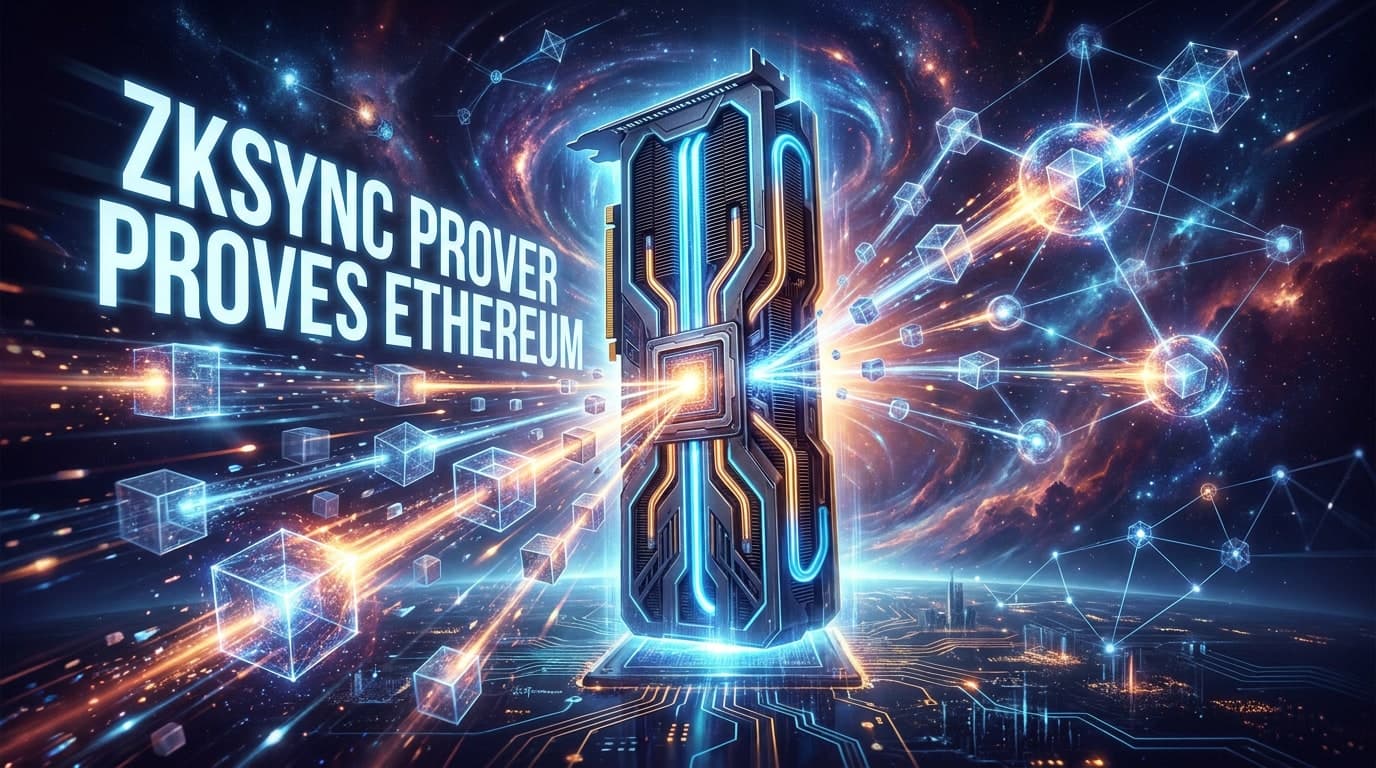
ZKsync Prover Cuts Ethereum Proof Time to 10 Seconds
ZKsync unveiled a new prover that verified 7,200 Ethereum blocks in under 10 seconds each, using one consumer GPU. Ethereum co-founder Vitalik Buterin called the zkEVM speed contest settled. That shift could translate into cheaper, faster Layer 2 transactions for anyone holding ETH in a wallet today.
What actually happened
ZKsync announced Airbender Prime on 17 October 2026, according to Wu Blockchain. A single NVIDIA RTX PRO 6000 Blackwell GPU proved 7,200 consecutive mainnet blocks, with 99% finishing proofs in under 10 seconds. Every block, witness preparation included, closed within 12 seconds. The system runs on the open RISC-V standard and hash-based STARK proofs, designed for post-quantum security with a separate verifier. Buterin said proof speed is no longer the main question and urged teams to focus on formal verification, proof-cost limits, and audits of the proving system itself. ETH traded at $2,412 (USD), down 1.20% over 24 hours, swinging between $2,393 and $2,443 on $7.64 billion in volume.
How we got here
Proof speed has driven zkEVM competition for about two years, as rollup teams chased faster, cheaper ways to prove Ethereum blocks. Buterin's comment marks the first time a core Ethereum figure has called that race effectively over. The same week, Lido added native ETH staking across four Layer 2 networks, Arbitrum, Base, Linea and Optimism, removing the need to bridge back to mainnet to stake. ENS DAO also moved to activate ENSv2 on mainnet. Ethereum's scaling roadmap has leaned on proof performance for years. This week showed multiple parts of that roadmap advancing together, not just one upgrade in isolation.
Why this matters for you
For everyday wallet users, faster and cheaper proofs point toward lower fees on the Layer 2 networks many apps, including bonuz, rely on for everyday transfers. Security work, not speed, is now the real race, which matters if your funds sit inside a rollup. Stakers benefit too: Lido's four-chain integration lets you stake ETH directly from Layer 2 wallets, skipping a manual bridge step. For holders, price action stayed calm, ETH moved inside a $50 range, even as ether ETFs saw $320 million (USD) in outflows this week, according to The Defiant. Technical progress and fund flows are not always in sync.
The bigger question
If proofs keep getting faster and cheaper, trust shifts from speed to correctness. Can formal verification keep up with how fast zkEVMs ship new features, or will rollups outpace the checks meant to keep them safe? The answer shapes whether cheaper Ethereum transactions come with the same guarantees users expect today. No team has set a public timeline for finishing that verification work.
What to watch
Blur closes its trading frontend on 12 November 2026, with its Blend lending protocol halting new loans that day. PancakeSwap's proposed fee changes could begin rolling out in November 2026, finishing by late January 2027. ENS DAO's ENSv2 proposal still needs a Snapshot vote. Watch for formal-verification updates from zkEVM teams following Buterin's comments, and for how bonuz-connected apps handle any resulting fee drops.