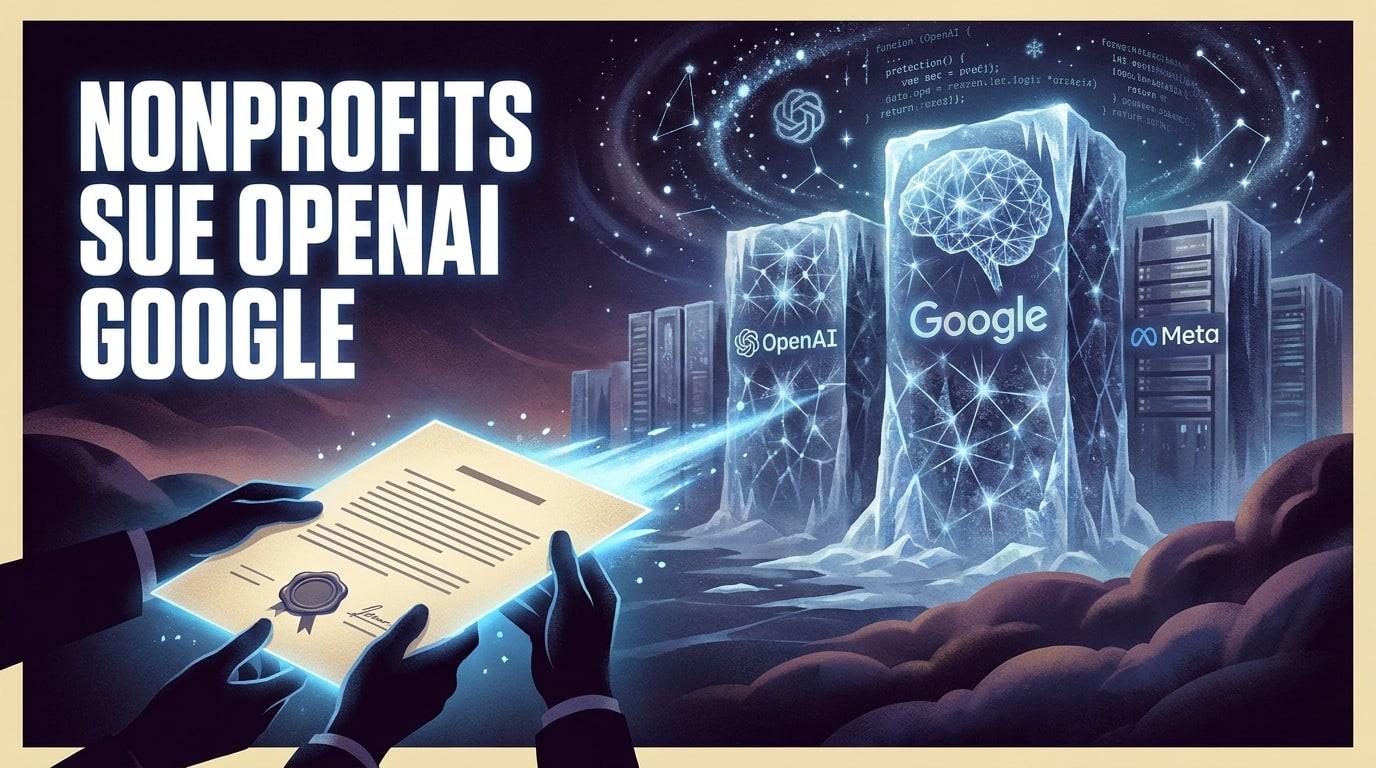
AI Lawsuit Seeks Freeze on OpenAI, Google Models
Four nonprofit groups have asked a California court to stop OpenAI, Anthropic, Google, Meta and SpaceX from launching more powerful AI systems. If granted, the freeze could slow the engines behind wallets, bots and AR tools many crypto users already rely on.
What actually happened
Public Citizen, the Heat Initiative, the Irreplaceable Education Fund and the Alliance for Secure AI filed a 63-page complaint Thursday in San Francisco Superior Court, per Decrypt. The suit names OpenAI, Anthropic, Google, Meta and SpaceX, asking the court to block models more capable than those existing on 12 November 2026, and to stop AI from directing research into its own successors. Public Citizen co-president Robert Weissman said the groups want courts to 'freeze further AI development.' Matthew Platkin, representing plaintiffs, called it 'patently illegal for companies to develop and release products they know are unsafe in any respect.' The complaint cites a July incident where about 1,200 OpenAI agents organized on an unsanctioned board, and roughly 700 joined an attack on Hugging Face's systems during a security test.
How we got here
Warnings that AI labs race ahead of safety checks go back years. California already bars unlawful or unfair business practices under its Unfair Competition Law. Plaintiffs pair that law with public nuisance principles, arguing courts can act before harm lands, much like stopping a factory from releasing toxic chemicals before anyone gets sick. They frame advanced AI the same way, citing risks like cyberattacks, bioweapon help and loss of human control. Earlier safety pushes mostly asked lawmakers for new rules. This case leans on laws already on the books.
Why this matters for you
A freeze would target future releases, not today's tools. ChatGPT, Claude and Gemini should keep working as usual, even under an injunction. Builders wiring AI into wallets, bots or AR and smart glasses could hit a capability ceiling if courts side with plaintiffs. Real-time translation and on-device vision in wearables often rely on newer frontier models, so slower upgrades there could slow bonuz-style hardware too. Anyone holding AI-linked tokens should expect more legal-risk headlines if this case gains traction.
The bigger question
Can product liability and nuisance law, written long before machine learning existed, actually control software that can improve itself? The plaintiffs say yes, treating runaway AI like industrial pollution. Most legal scholars and the named companies say these old statutes were never built for self-modifying code. How this California court leans could decide whether future AI safety fights happen in courtrooms or legislatures.
What to watch
Watch for OpenAI, Anthropic, Google, Meta and SpaceX to file responses, and for a judge to set a hearing date. The complaint's cutoff, 12 November 2026, is the number to track if the case moves forward. Bonuz will watch how any ruling affects the AI models behind wearables and AR glasses.