Ethereum's Privacy Code Just Got Real, Says Vitalik
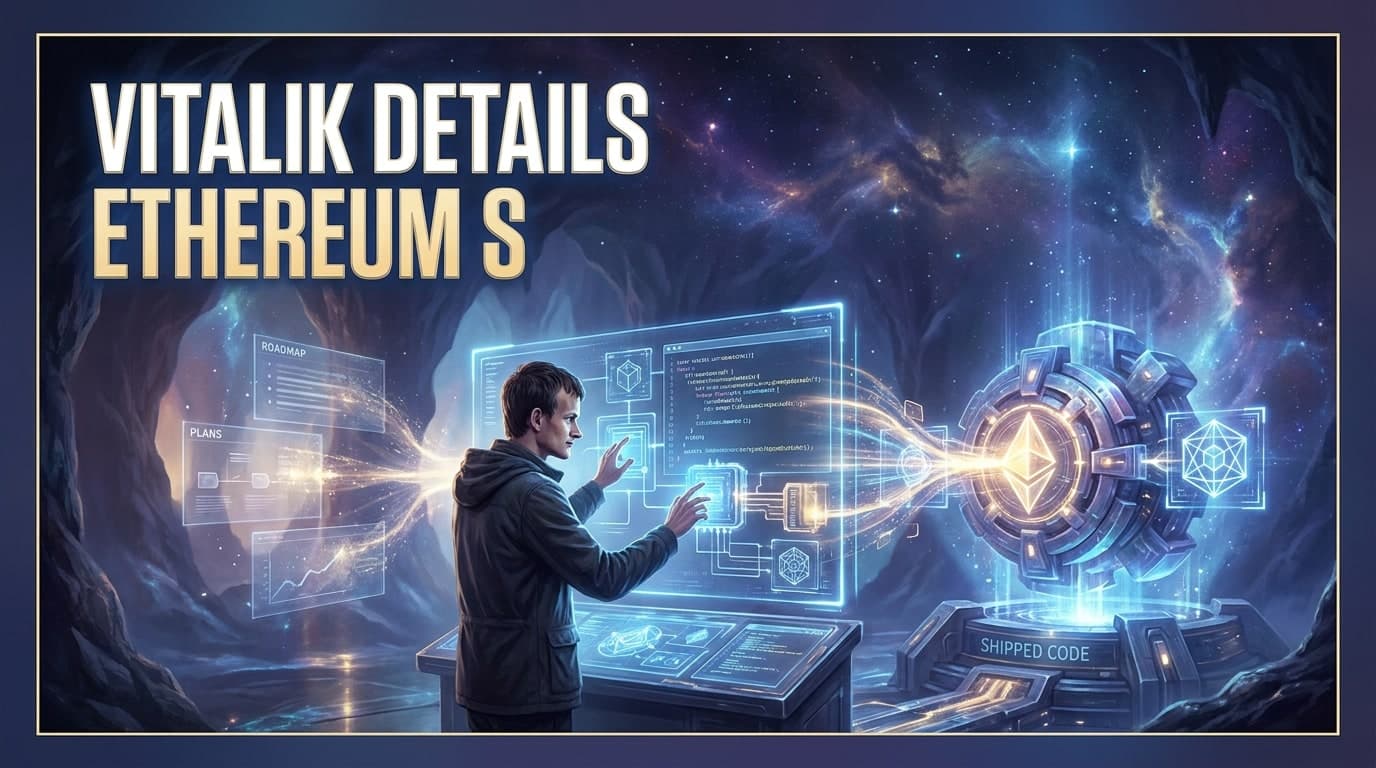
Vitalik Buterin told a Shanghai summit that Ethereum's privacy upgrades now exist as actual code, not just plans. Everyday wallet users should notice, because this could change how transactions look once the work ships.
What actually happened
On 24 September 2026, Buterin said Ethereum's cryptography plans have moved into formal EIPs, according to Wu Blockchain. He named EIP-8288, which pushes large proof verification off-chain into the mempool. He also named FOCIL, adding 16 inclusion-list creators alongside one block builder. Both target the H-Star fork, roughly two years away. Separately, CoinDesk reported analysts spotted $75 million (USD) in ether moving from FTX and Alameda-linked wallets to a Wintermute address. No sale or reason has been confirmed. ETH traded at $2,679, up 0.80% over 24 hours, ranging $2,635 to $2,698 on $14.36 billion in volume.
How we got here
Buterin has discussed zero-knowledge cryptography for over a decade, but he framed this year as different because the upgrades are now scheduled engineering, not theory. Ethereum's 2022 shift to proof-of-stake set a precedent for moving concepts into production. Arbitrum recently swapped its Timeboost auction for per-transaction priority fees, sending 97% of proceeds to its DAO treasury, per The Defiant. KB Securities, Securitize, and Optimism also signed an exploratory tokenization deal for Korea, where the first regulatory phase starts February 2027. Core protocol work, L2 fee design, and institutional tokenization are advancing together.
Why this matters for you
For wallet holders, programmable privacy could eventually let transactions hide certain details while staying verifiable onchain. For builders, FOCIL spreads block-inclusion power across 16 parties instead of one, lowering the risk of a single actor blocking a transaction. Arbitrum's fee change alters how apps and users pay for priority, with most revenue now returning to its DAO. Korea's tokenization MOU points toward more regulated assets reaching Optimism-based apps after 2027, a stack worth watching for future wallet integrations. The unexplained Wintermute transfer shows large dormant wallets can still move markets without warning.
The bigger question
Can a blockchain add selective privacy through code and keep the open, checkable ledger that earned it trust in the first place? Or does layering privacy on top change what a public blockchain actually is?
What to watch
Watch the H-Star fork, roughly two years out, where EIP-8288 and FOCIL are meant to ship. Korea's tokenization framework opens its first phase in February 2027. Track the Wintermute wallet for further ether movement, and strawmap.org for Ethereum's public post-fork upgrade list.