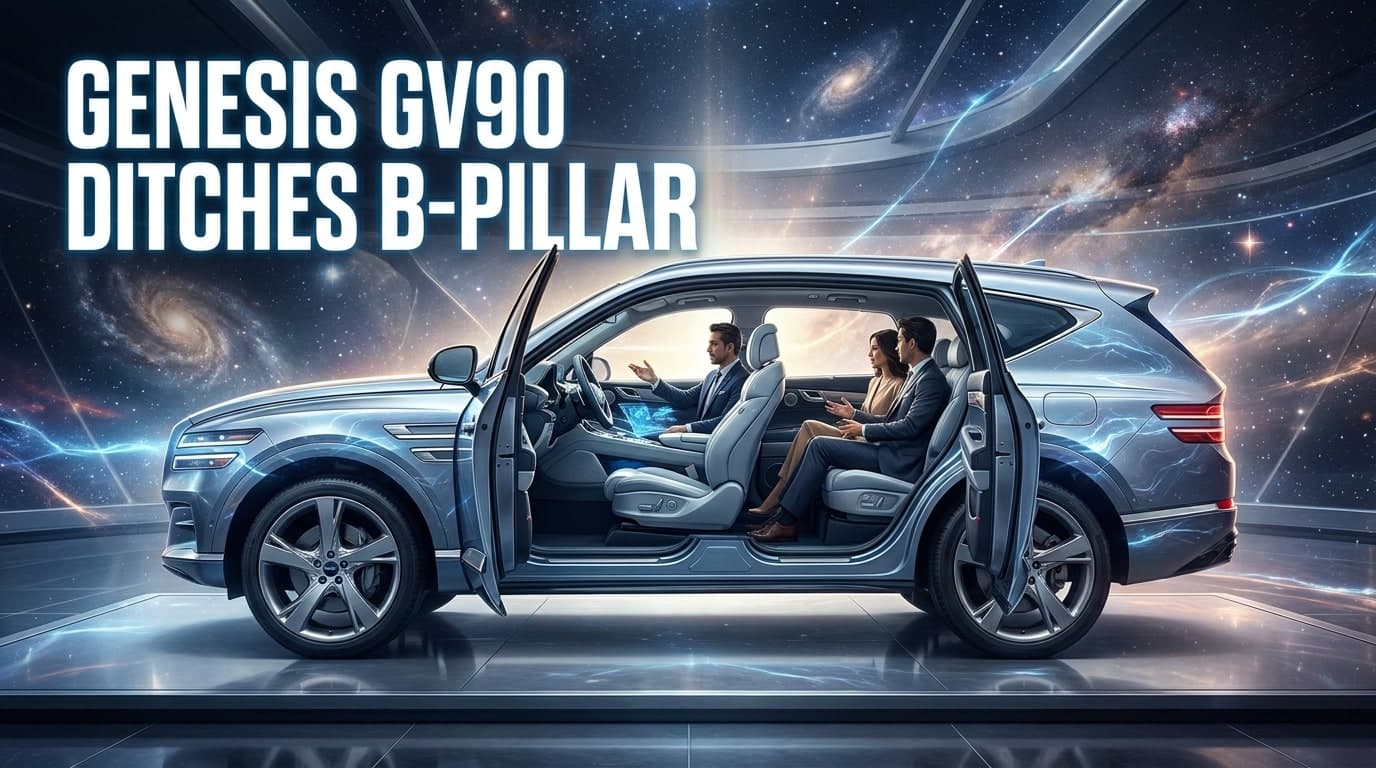
Genesis GV90 Electric SUV Skips B-Pillar for Coach Doors
Genesis just revealed the GV90, a three-row electric SUV with doors that remove the B-pillar entirely and front seats that spin 180 degrees. It matters because it shows how far luxury EV makers will push structural risk for a bolder cabin, a trend hardware watchers should track.
What actually happened
Genesis, Hyundai's luxury arm, unveiled the GV90 on 20 August 2026, according to The Verge. The brand calls its system the Neolun Arch Gate, described as the world's first independently opening hidden B-pillar coach door. Both rows open outward with no B-pillar, the beam that normally braces the roof and absorbs side-impact force. In its place, Genesis uses two high-strength steel tubes and a cabin frame 1.5 times thicker than standard, backed by structural foam. The SUV runs a 123.5kWh battery at 800 nominal volts with a wireless battery management system, and two motors producing 657 horsepower and 590 lb-ft of torque. Charging tops out at 350kW, with an estimated 310 mile range. The cabin adds a 23.6 inch OLED screen that expands to 24.6 inches, a 25 inch head-up display, heated floors and armrests, and 15-bladder massage seats.
How we got here
Automakers have long treated the B-pillar as essential, since it absorbs side-impact force and holds the roof during a rollover. Rotating seats have shown up before, mostly in early self-driving concepts and Zoox robotaxis, but rarely in a mass-market three-row SUV. The timing is notable too. Many US automakers are pulling back from ambitious EV features right now, chasing affordability as demand cools. Genesis is moving the other way, adding cost and complexity instead of cutting it.
Why this matters for you
For buyers, the GV90 signals that premium EV design is leaning into visible risk for a flashier cabin. Regulators and crash testers still need to confirm the reinforced frame actually matches standard B-pillar protection, since no outside results exist yet. For bonuz readers tracking new hardware categories, including AR glasses, the same pattern applies: makers push unproven structural choices before independent testing catches up. A strong crash result could normalize pillarless coach doors across the industry. A bad one could freeze the idea for years.
The bigger question
Genesis says its reinforced frame matches standard B-pillar protection, though no outside lab has confirmed that yet. The same question follows any bold hardware redesign, from car frames to wearable devices. How much trust should users extend to a new structural idea before independent testing proves it actually holds up?
What to watch
Genesis has not set a price, release date, or crash test schedule for the GV90. The Verge notes that regulators and independent testers will ultimately decide whether the hidden B-pillar setup meets real-world standards. bonuz.market will track crash results and launch news as more three-row luxury EVs reach American roads.