Hong Kong's 24/7 On-Chain Settlement Plan for 2026
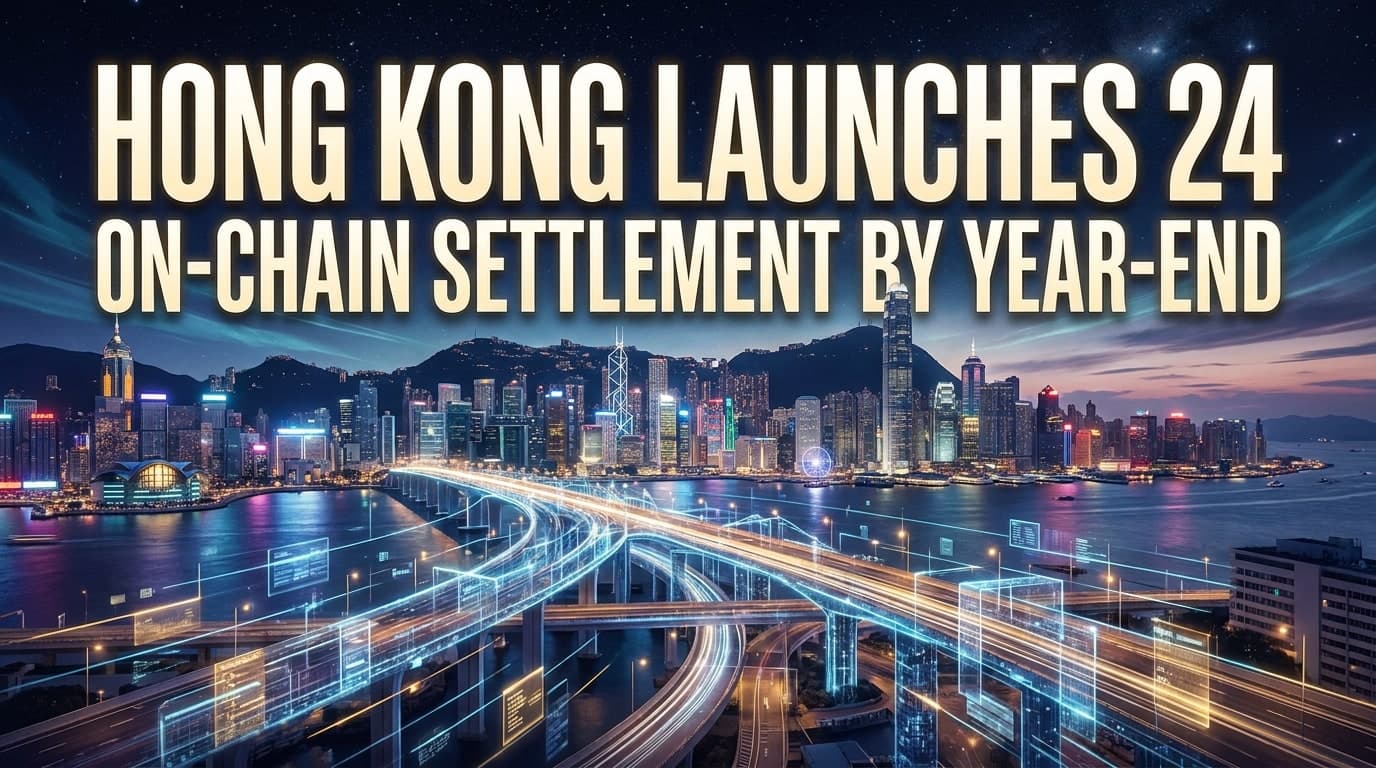
Hong Kong's central bank plans to run blockchain settlement around the clock by the end of 2026, right as South Korean exchanges saw stablecoin prices spike far above their pegs. Anyone holding stablecoins in Asia should pay attention to how fast, or how unevenly, this region builds its rails.
What actually happened
On 23 September 2026, HKMA chief executive Eddie Yue said the Central Moneymarkets Unit, or CMU, will launch new services before year end, targeting 24-hour real-time settlement on-chain for the digital Hong Kong dollar and central bank digital currencies. The CMU may also accept tokenised deposits and regulated stablecoins for settlement, according to Wu Blockchain. In South Korea, industry voices want liquidity rules after stablecoins traded well past their reference prices. On Upbit, yen-pegged JPYC hit 37.6 won against a reference near 8.8 won, over four times normal. PYUSD rose from 1,379 won to 1,760 won. On Bithumb, EURC reached 7,860 won, over 400% above its prior close.
How we got here
The same week, China's central bank repeated that Bitcoin, Ethereum, and Tether are not legal tender domestically, and that offshore RMB-pegged stablecoins stay illegal. Hong Kong moves the opposite way, racing to build settlement rails for tokenised money. Divergence is not new: Kazakhstan's regulated trading volume grew from $320 million (USD) in 2023 to $10.58 billion (USD) in 2025, while the UAE and Singapore expand stablecoin payment corridors. Asia has no shared playbook. Some regulators build rails, others shut doors, and Korea is writing rules only after prices already broke.
Why this matters for you
For everyday wallet holders, Korea's numbers are a warning. A stablecoin can trade far from its peg on a listed exchange, even with full reserves, until market-maker rules catch up. For builders, Hong Kong's CMU upgrade signals a working settlement layer that could plug into tokenised deposits and regulated stablecoins by year end, relevant to any wallet routing through Hong Kong rails. For exchanges, Korea's proposed fixes, designated market makers and mandatory deviation disclosure, could become the regional template. Bonuz users moving stablecoins across Asia should watch which country builds infrastructure and which one restricts it.
The bigger question
Can Asian regulators put liquidity safeguards in place fast enough to match new stablecoin listings? Or will opposite paths, Hong Kong opening settlement rails while China blocks activity, split the region into systems that do not talk to each other? The answer decides whether a stablecoin moves cleanly between Asian exchanges, or whether users face different rules and redemption risks in every market they trade in.
What to watch
Hong Kong's CMU is set to launch 24/7 on-chain settlement before the end of 2026. South Korea has no confirmed date yet for its stablecoin liquidity framework, still under industry discussion. Kazakhstan's energy and digital ministries are drafting joint rules for gas-powered mining. Bonuz will keep tracking how these settlement and stablecoin changes reach everyday wallet users across the region.