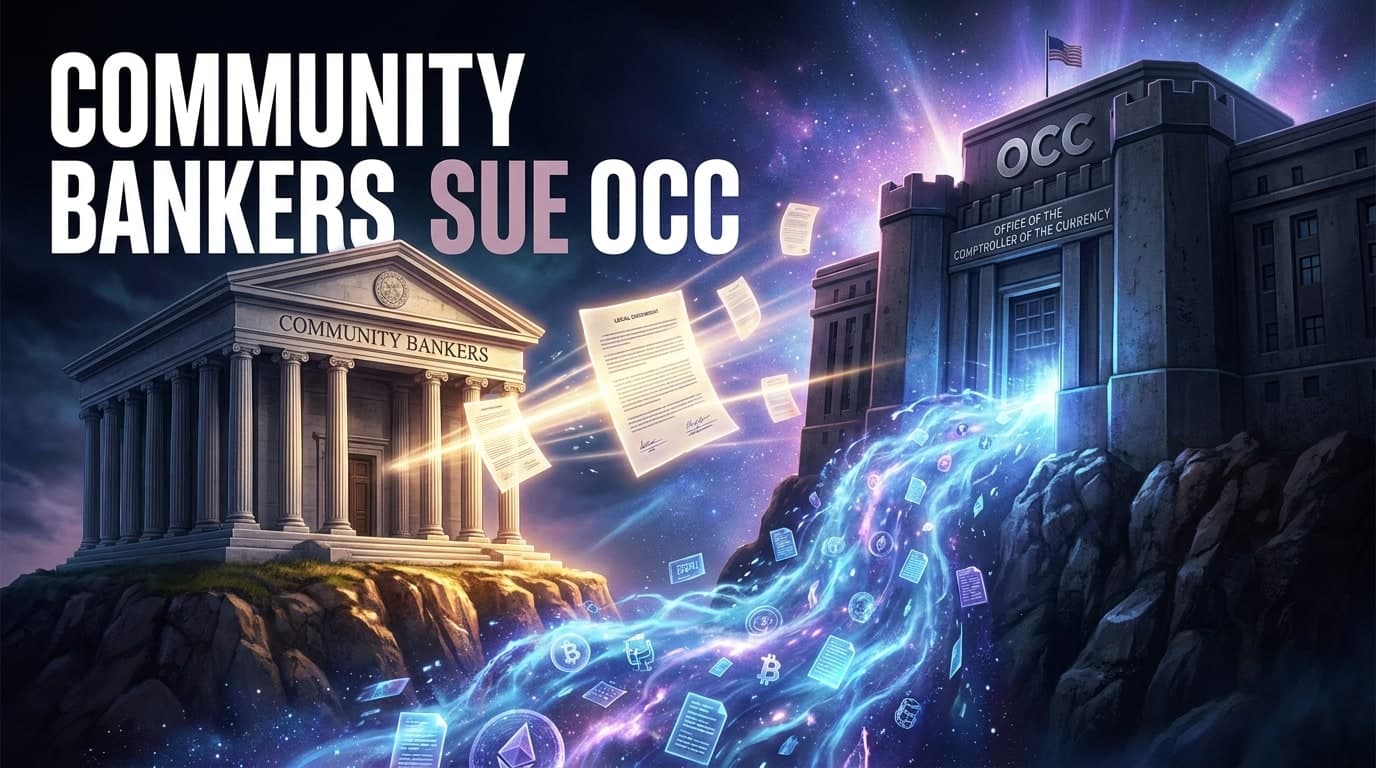
ICBA Sues OCC Over Crypto Trust Charters: Wallet Impact
A U.S. community banking group has taken the OCC to court over crypto trust charters. The case could decide which companies are allowed to hold and custody digital assets under federal rules, a question that touches every wallet user who trusts a third party with their crypto.
What actually happened
The Independent Community Bankers of America, known as the ICBA, filed a lawsuit against the Office of the Comptroller of the Currency, the OCC, according to CoinDesk. The ICBA claims the OCC exceeded its legal authority by granting trust charters to crypto firms. The report does not name the specific companies involved, the court hearing the case, or the filing date. No direct quotes from the ICBA or the OCC were included in the available coverage. The dispute centers on whether the OCC can legally classify crypto companies as trust institutions, a status that lets them operate nationally under one federal license.
How we got here
Trust charters let a company operate across all states under one federal approval, instead of applying state by state. Crypto firms have used this path to offer custody and stablecoin services faster. Community banks, represented by groups like the ICBA, have pushed back for years, arguing this blurs the line between regulated banks and crypto companies that do not take deposits. This lawsuit turns that long standing disagreement into a court case. It asks a judge to decide whether the OCC ever had the power to hand crypto firms this kind of charter in the first place.
Why this matters for you
If the ICBA wins, the OCC may have to pause or undo charters already granted, slowing crypto firms' path to bank like custody status. If the OCC wins, crypto companies get clearer legal ground to hold trust charters nationwide. For everyday wallet users, this ruling could decide who is allowed to safely custody their digital assets under federal rules. For builders integrating custody partners into apps, including wallet features inside bonuz, the outcome affects which providers carry real regulatory backing.
The bigger question
How much power should one banking regulator have over who qualifies as a trust institution for digital assets? The decision could shape which companies millions of people trust to hold their crypto. It also asks whether banking laws written before crypto existed can fairly apply to firms built entirely around it.
What to watch
The source report does not give a court name, filing date, or hearing schedule. Watch for the OCC's public response and for which court accepts the case. Wallet users and bonuz readers following custody rules should track updates on this docket, since the ruling could influence which crypto custody providers gain long term regulatory trust.