Polymarket Bets Now Track GPU Rental Prices to 2028
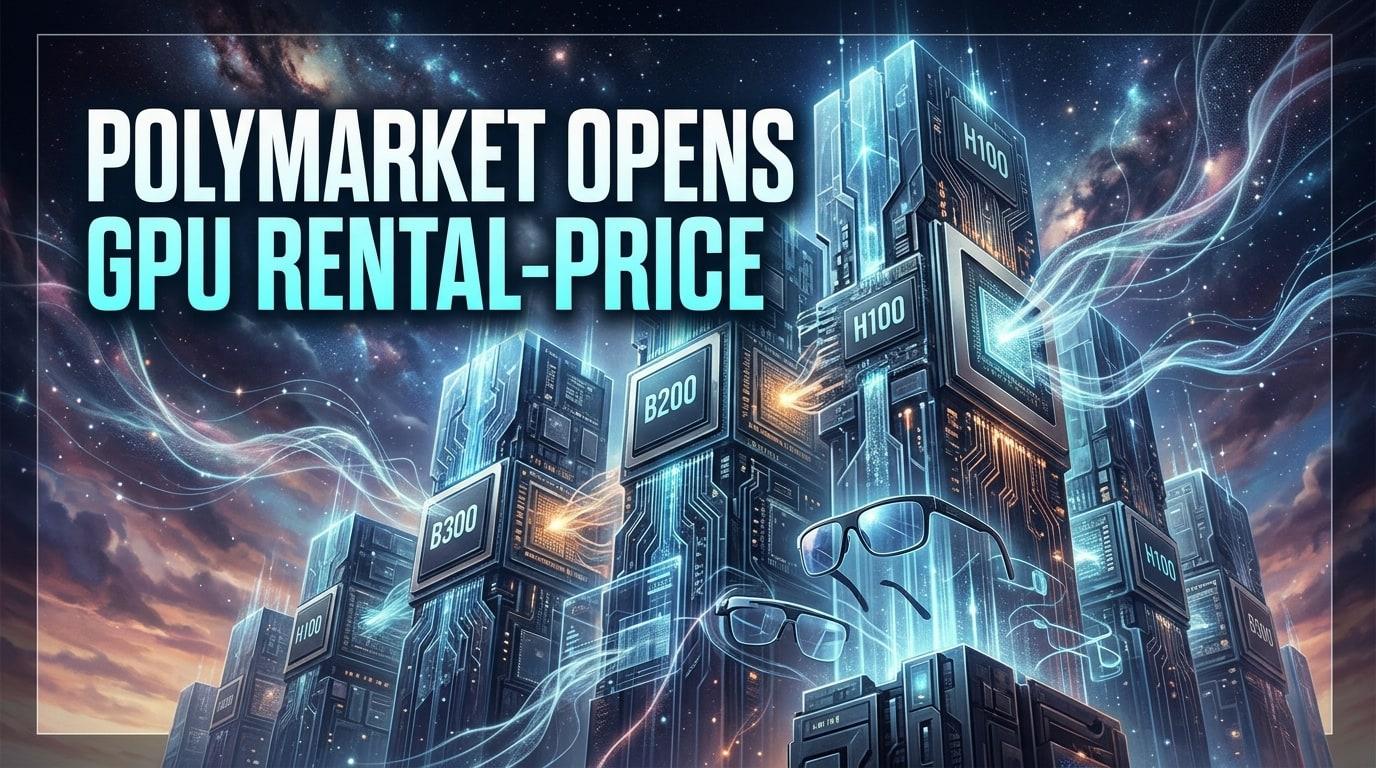
Polymarket now offers contracts letting traders wager on future GPU rental costs, covering H100, B200 and B300 chips, running through 2028. For anyone using crypto wallets or AI-linked apps, these markets hint at where computing costs, and future devices, might head.
What actually happened
According to The Defiant, Polymarket rolled out prediction contracts tied to GPU rental prices through 2028. Three chip models are covered: H100, B200, and B300. Each contract settles against Ornn rental-price indices, not physical GPU access. Traders take a position on price direction without renting or operating any hardware themselves. The report does not disclose expiry dates, current trading odds, volume figures, or how Ornn compiles its indices. Those specifics were absent from the source material reviewed here.
How we got here
Polymarket already runs contracts on elections, sports, and crypto prices. GPU chips like the H100, B200, and B300 power AI training and inference, the same computing layer that cloud-dependent AR and smart glasses rely on. The source material offers no history on when GPU-price betting began or how Ornn compiles its data. Because only one report describes the launch, deeper background on methodology or demand remains unverified.
Why this matters for you
For everyday wallet holders, this adds a new market category tied to real-world hardware costs, not just token prices. For builders making AI-dependent apps, including AR glasses that lean on cloud processing, these indices could become a rough gauge of future compute expenses. For bonuz users watching wearable hardware trends, GPU pricing directly affects how affordable future smart glasses might become. Fee structures, minimum trade sizes, and settlement rules are not detailed in the source, so practical trading mechanics stay unclear for now.
The bigger question
Will GPU rental-price markets end up reflecting genuine hardware costs, or mostly speculative mood swings disconnected from actual chip supply? The answer matters for anyone tracking AI compute pricing as a proxy for future device costs, including makers of AR and smart glasses that depend on cloud-based processing. If these markets prove accurate, they could become a quiet pricing signal watched well beyond crypto trading circles.
What to watch
These contracts run through 2028, leaving years to compare forecasts against real rental prices. No specific expiry dates, review points, or volume figures appear in the source report. Bonuz will keep tracking how AI compute pricing connects to the hardware choices shaping next-generation wearables, including AR and smart glasses that rely on cloud-based processing power.