SSD Failures Push PC Builders Toward Cloud Backup
A Verge senior editor rescued his self-built computer twice after two solid-state drives died without warning, relying solely on a Dropbox backup. Rising component prices mean cloud backup now often costs less than replacing failed drives, a tradeoff every builder should weigh.
What actually happened
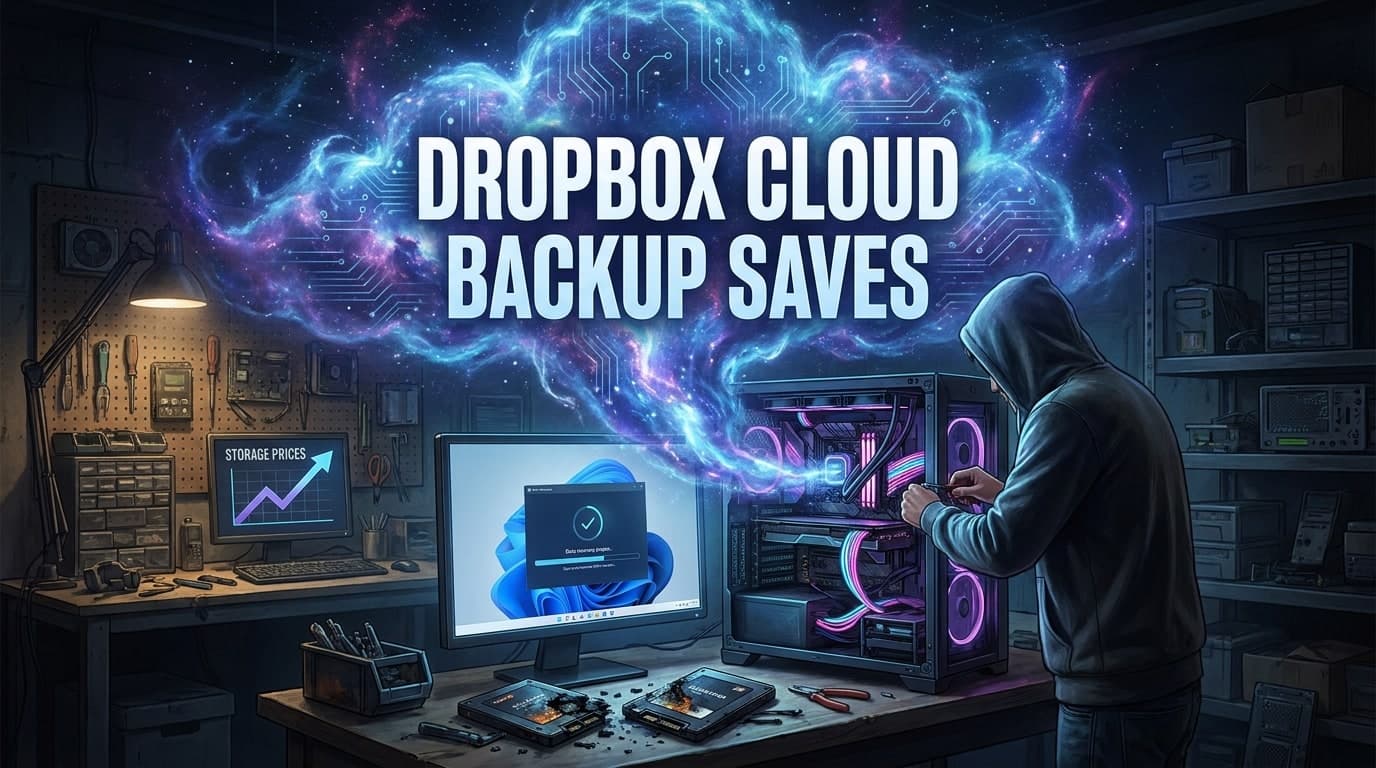
TC Sottek at The Verge described two failures of separate 2TB Samsung 970 Evo SSDs, neither drive giving warning before dying. He has paid for Dropbox since 2018. His family plan, covering six people, costs about $204 a year (USD), roughly $17 a month. A solo 2TB plan runs $9.99 a month, near $120 annually, while a 3TB tier costs about $143 a year. Dropbox caps single file transfers at 50GB. Sottek reported average upload speeds near 20Mbps and said restoring his synced 1TB library takes about two hours over a gigabit line. His replacement drive, a Samsung 990 Evo Plus, cost almost double what the failed 970 Evo did, according to Dropbox Cloud Backup Saves PC Builders From Disaster.
How we got here
Sottek started backing up to Dropbox in 2018 while running a large crowdfunded game project, fearing local file loss even with home backups in place. He copied his entire work partition to the cloud as a safety net. Since then, component costs have jumped, making RAID arrays and airgapped drives pricier to maintain. That price climb has nudged many builders toward paid cloud subscriptions instead of buying spare physical drives.
Why this matters for you
For bonuz.market readers building or upgrading rigs, storage backup is now a budgeting line, not an afterthought. Dropbox's $120 to $204 a year sits alongside Backblaze's $99 unlimited plan, Apple iCloud Plus, and Adobe Creative Cloud storage. Anyone keeping wallet seed phrases, private keys, or project files on a single local drive faces the same choice Sottek did: cloud convenience against offline control. As SSD prices keep rising, cloud insurance looks cheaper by comparison, though it shifts trust onto a third party.
The bigger question
As physical storage grows costlier, how much of anyone's critical data, including crypto keys and irreplaceable files, should sit only on hardware they own, rather than in a company's cloud?
What to watch
The Verge ran Sottek's account on 9 August 2026, capturing pricing at that moment. Watch SSD prices, which he says have roughly doubled for his replacement drive, plus any rate changes from Dropbox, Backblaze, or Apple as backup demand grows. bonuz.market readers pricing new builds should factor backup costs in from day one.