Argentina Clears Milei in LIBRA Memecoin Fraud Case
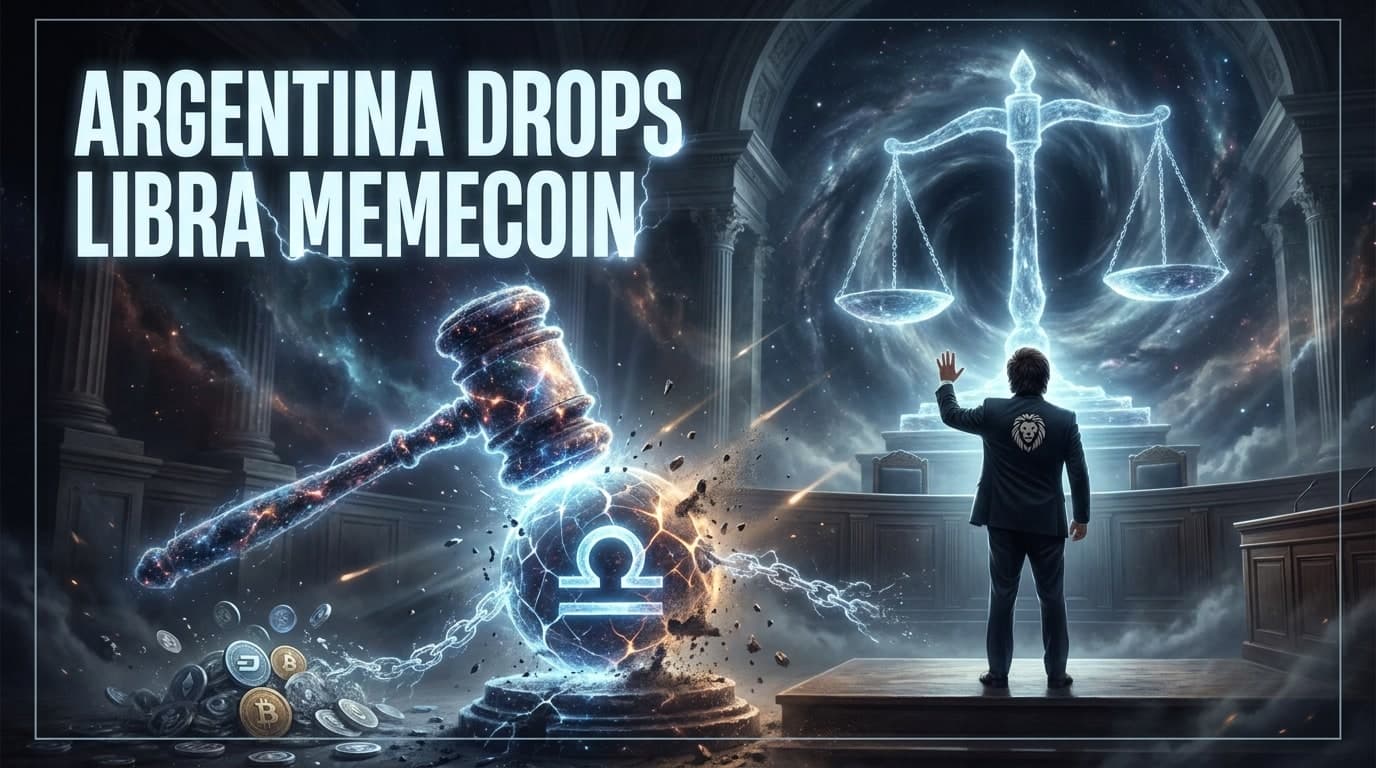
An Argentine judge dismissed the fraud case against President Javier Milei over the collapsed LIBRA token on 24 October 2026. For anyone holding tokens tied to public endorsements, the ruling matters: promoting a coin that later crashes may not count as fraud under the law.
What actually happened
Judge Marcelo Martinez de Giorgi closed the case, clearing Milei, his sister Karina Milei, and adviser Hayden Davis, according to CoinDesk. Eleven people in total were cleared, including lobbyist Mauricio Novelli and KIP Protocol CEO Julian Peh. Milei promoted LIBRA on X on 14 February 2025, calling it a fund for small businesses. The Solana based token hit roughly $5 (USD) before losing more than 90% of its value, wiping out over $250 million (USD) in investor money. Researchers traced about $99 million (USD) pulled from eight wallets linked to LIBRA's creator. The judge wrote that Milei's post gave the token 'greater impact' but found no proof of 'a specific deception' required for fraud.
How we got here
LIBRA's crash in February 2025 turned into one of crypto's biggest political scandals. CoinDesk earlier reported text messages where Davis described paying for access to Milei's circle and sending funds to Karina Milei, claims he later denied. Milei deleted his post and said he acted in good faith, denying any formal link to the project. Prosecutors opened the probe before Argentina's 2025 midterm elections. Milei's office called the case a political attack meant to hurt him during the campaign.
Why this matters for you
For everyday wallet users, this ruling is a warning, not a clearance. A public figure's endorsement does not guarantee safety, and courts may not treat it as fraud even after a token collapses. If you hold assets in a bonuz wallet or elsewhere, do your own research before buying a token backed by a celebrity or politician. For builders, the case may lower legal risk around political endorsements, but trust with users still depends on transparency. For LIBRA's original investors, this closes one path to repayment through Argentina's criminal courts.
The bigger question
If a leader's endorsement is legally separate from a token's actual performance, who answers for the losses when that token fails? Courts in different countries may answer this question in different ways. That leaves everyday wallet holders without one clear global rule for spotting deception before they invest their money.
What to watch
Investors removed from the case in July 2025 are challenging that decision before Argentina's Federal Criminal Cassation Court. A reinstatement could open the door to appealing this dismissal. Prosecutor Eduardo Taiano is not expected to appeal. No date has been set for the next ruling, so wallet holders watching this case have no fixed timeline yet.