Google Skips Smart Rings, Doubles Down on Wrist Wearables
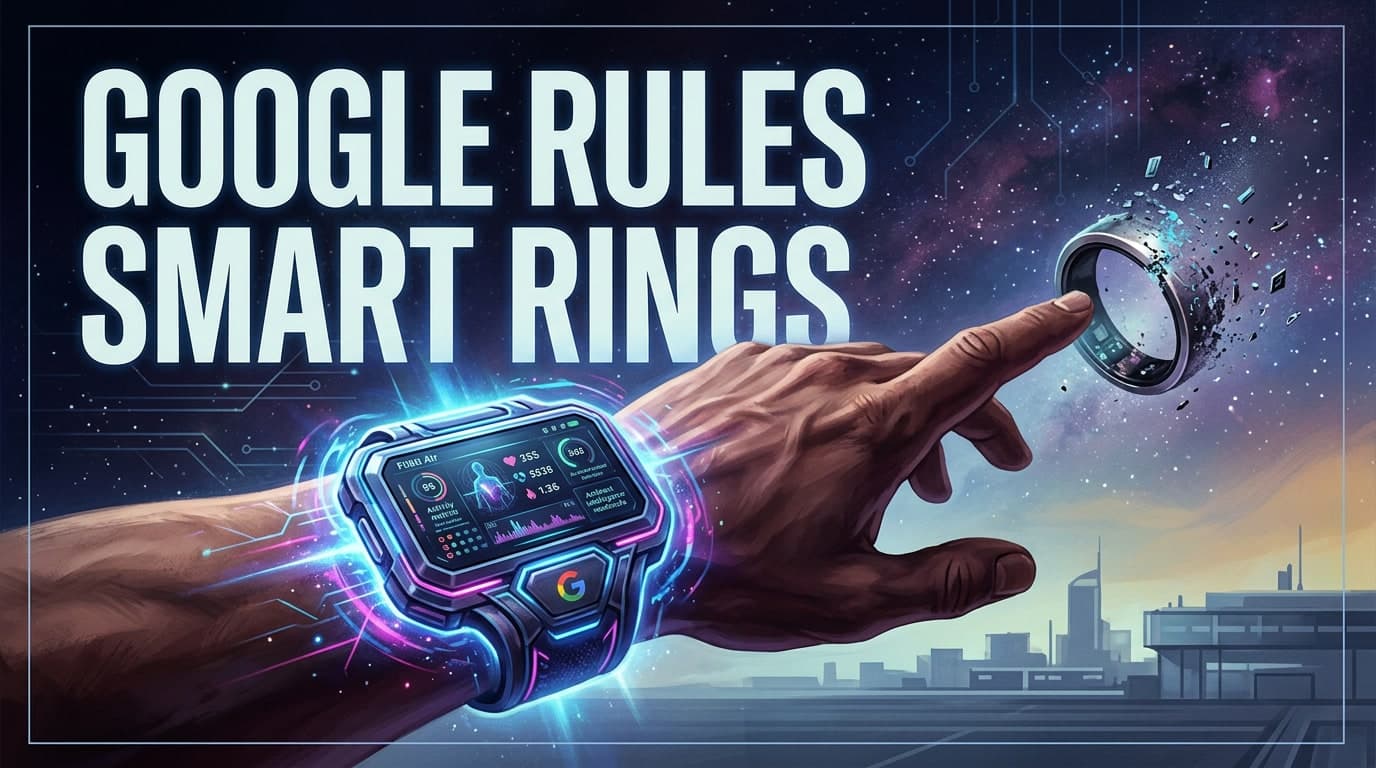
Google confirmed it has no plans to release a smart ring soon, choosing instead to grow its wrist wearable lineup with the new Fitbit Air. The move matters because it shows even the biggest tech firms remain unsure which body-worn AI devices are worth building.
What actually happened
Speaking at a New York roundtable ahead of Made by Google, Rishi Chandra, Google's vice president of health and home, said wearable adoption remains near 30 percent. "70 percent of the population has no notion of wearables," he told The Verge. Sandeep Waraich, senior director of wearables, said Google treats wrist-based AI prompts as "glanceable," targeting about seven seconds per interaction. Chandra ruled out a near-term smart ring, arguing the wrist still holds "so much headroom" and that Fitbit Air has "far bigger expansion opportunities." Waraich also ruled out an "Ultra" Pixel Watch, leaving the current Pixel Watch as Google's top model.
How we got here
Google first described this multi-device wearable strategy to The Verge a year earlier, framing AI wearables as an ecosystem rather than one product. Since then, rivals pushed into AI glasses, smart rings, and pendants from startups like Vocci, Taya, and Sandbar, which record and transcribe speech. Meta's camera glasses drew privacy criticism, a risk Google appears to avoid by favoring wrist devices without microphones for now. The Pixel Watch 5 already runs a Proactive Assistance feature, an early step toward the ambient AI hub Google keeps describing.
Why this matters for you
For bonuz.market readers tracking wearable and AR hardware, Google's caution signals the wrist stays the default AI surface for now, not rings or pendants. Builders eyeing microphones for ambient AI face trust and privacy hurdles before technical ones. Google's mention of camera sensors that never record hints at where its smart glasses thinking is headed, a detail worth watching for anyone betting on AR eyewear as the next wearable category. Expect slower experimentation from Google while startups keep testing new form factors.
The bigger question
If a wearable can sense everything around you, should it be allowed to remember any of it? Google suggests smart glasses could work as sensors that never record, only answering questions in real time. That leaves an open question for every hardware maker: who decides what a device remembers, the company, the wearer, or the stranger standing nearby?
What to watch
Made by Google, the event tied to this roundtable, follows the Pixel Watch 5 launch and Fitbit Air debut. No date exists yet for a smart ring or an Ultra Pixel Watch. bonuz.market will keep watching how camera-based sensor modes for smart glasses develop, alongside microphone debates across wrist wearables.