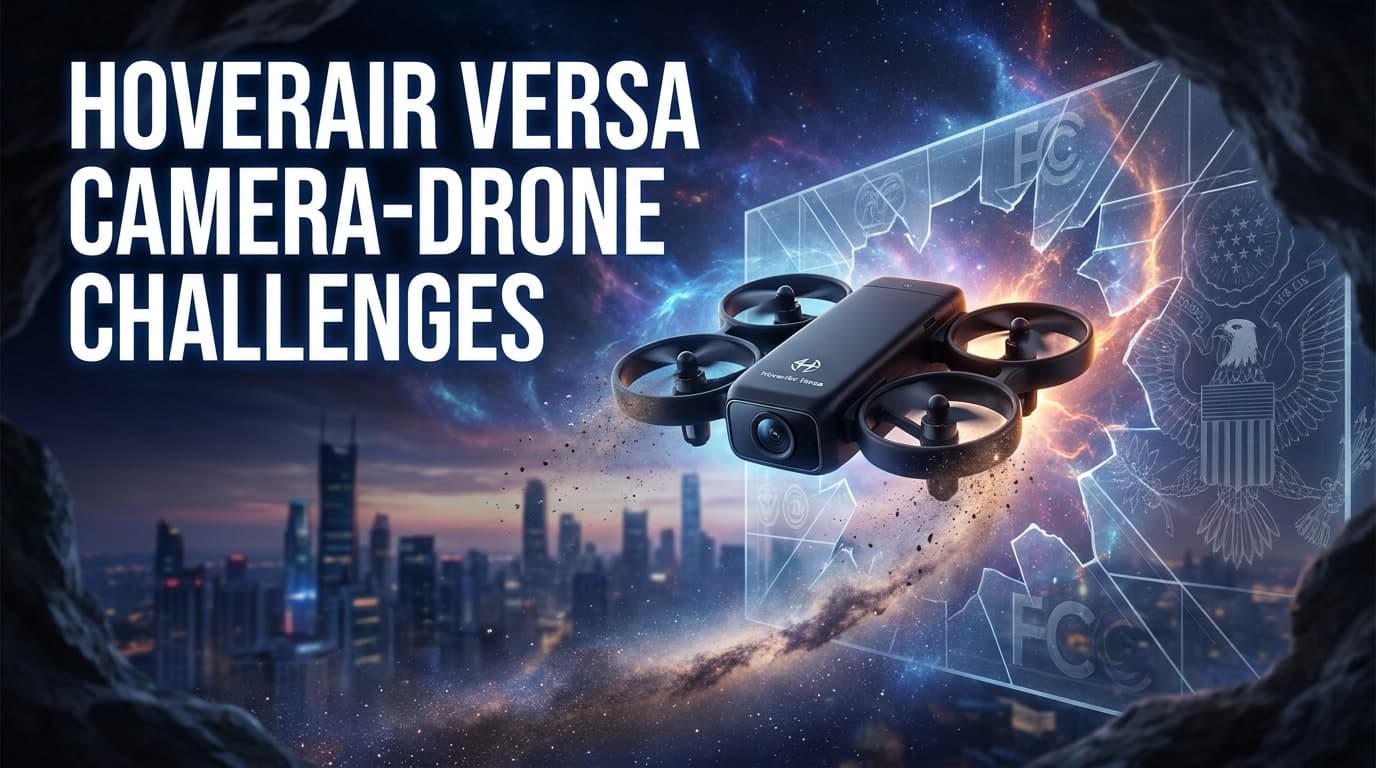
HoverAir Versa Skirts FCC Drone Ban as Pocket Camera
HoverAir just won FCC approval for a $750 (USD) device it calls a pocket camera, not a drone, avoiding a new US ban on foreign drones. Anyone shopping for flying cameras in 2026 should pay attention to how long this split-product trick actually holds up.
What actually happened
The FCC cleared HoverAir's Versa on 9 August 2026, based on records reviewed by The Verge. Zero Zero Robotics, the company behind HoverAir, put the $750 (USD) Versa on Indiegogo this week as a steadycam, selling a separate snap-on 'Flight Kit' of propellers as an optional accessory. Global marketing director Anita Facundo told The Verge the kit 'extends VERSA's capabilities' and that HoverAir stays in 'full compliance with the applicable regulatory requirements for the full product configuration offered to US customers.' Only the camera body went through FCC review, since the propellers hold no wireless radio. HoverAir's earlier Aqua drone got banned the same way in December 2025, forcing refunds once US sales fell apart. Just 12 Indiegogo backers have picked the camera-only tier so far.
How we got here
The December 2025 ban traces back to the 2025 National Defense Authorization Act, which named DJI and Autel Robotics as covered manufacturers, not every camera or dronemaker. HoverAir's Aqua became one of the ban's first victims. The FCC typically hands certification to private Telecommunications Certification Bodies, and one approved Versa's camera simply because HoverAir does not sit on the Covered List. That approval sidestepped a bigger question: whether the camera qualifies as a 'UAS critical component,' a label the FCC says demands tougher scrutiny.
Why this matters for you
Buyers face real uncertainty. The FCC has a 30-day window to reverse the certification, and that clock has not run out. Order now, and you could end up needing a refund, just like Aqua customers did. For hardware builders, this is a live example of how far companies will push import rules to stay in the US market. Wearable and pocket-camera makers, including AR glasses developers, should take note: any part with a radio can trigger national-security review, drone or not. Teams designing modular sensor and camera hardware may need to rethink where one certified product stops and a new one starts.
The bigger question
If the flying hardware itself carries no radio, should regulators still call it a drone? The FCC's rules center on radios because that is what gets certified, yet HoverAir's split shows how a product can separate what regulators can inspect from what actually lets it fly. As more devices, cameras included, mix modular hardware with wireless chips, who draws the line?
What to watch
The FCC's 30-day reversal window runs from the 9 August 2026 approval and remains open. Indiegogo backers are tracking shipping dates closely. For bonuz.market readers following wearable and AR hardware, this case is an early signal of how regulators will handle modular devices with detachable, radio-free parts.