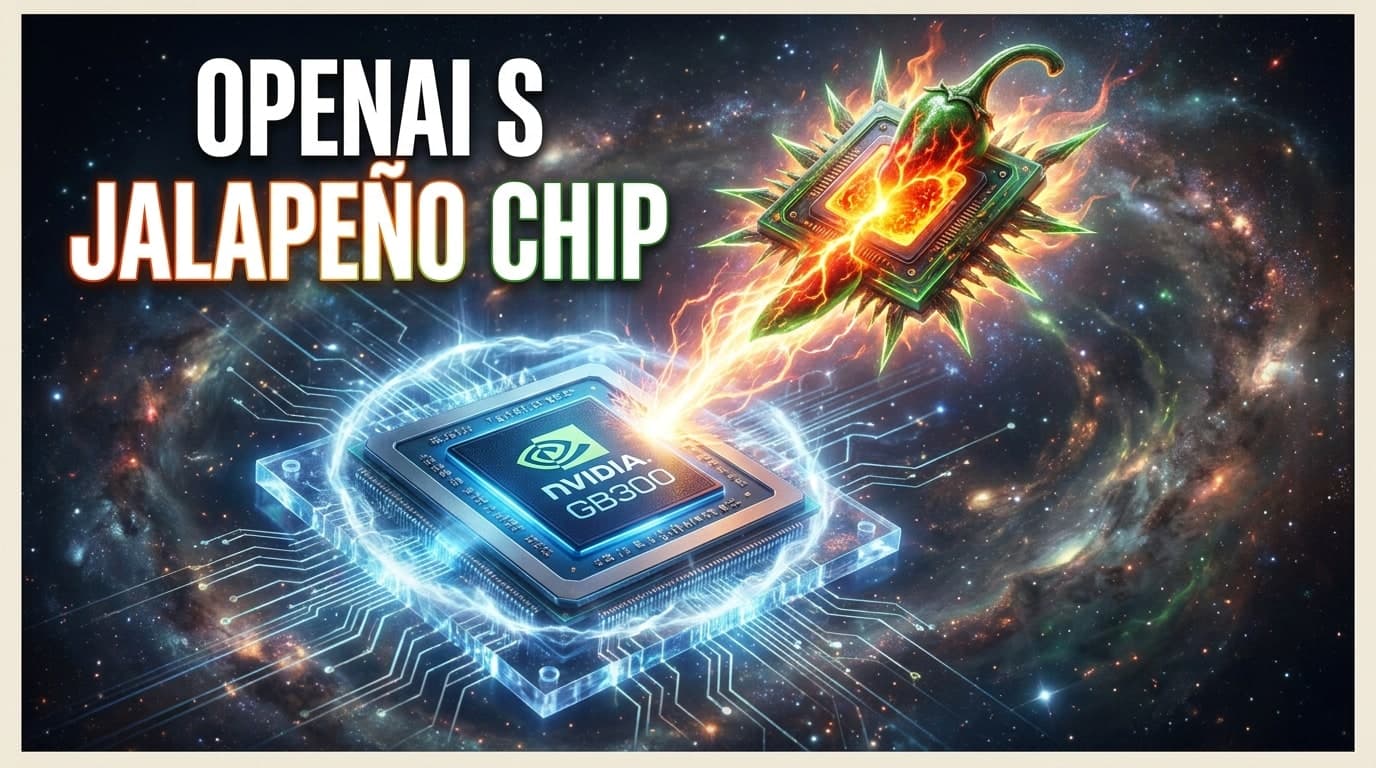
OpenAI's New AI Chip Claims to Outperform Nvidia's GB300
OpenAI unveiled its first custom AI chip, called Jalapeño, at the Hot Chips conference on Tuesday, claiming it beats Nvidia's GB300 GPU on speed and power draw. For everyday wallet users, this hints at cheaper, faster AI tools with lower energy costs built into the apps people already use.
What actually happened
According to Tom's Hardware, OpenAI's Jalapeño chip delivers up to 1.9 times more throughput per kilowatt than Nvidia's GB300. OpenAI also claims 3.6 times lower latency. The chip runs at 700 watts, compared with 1,400 watts for the GB300. Broadcom, an established chipmaker, co-developed Jalapeño with OpenAI. These are OpenAI's first published benchmarks for an in-house chip design, marking a shift beyond its usual software focus. OpenAI has not announced a release date or price for Jalapeño.
How we got here
Hot Chips is an annual venue where semiconductor firms share technical benchmarks with engineers and researchers. Until now, OpenAI relied on Nvidia GPUs to power its models, buying hardware rather than building it. Nvidia's GB300 remains the industry's leading AI chip. By partnering with Broadcom and publishing its own numbers, OpenAI signals a move from customer to competitor, a shift that could eventually ripple into the wallets, apps, and AI assistants people use daily.
Why this matters for you
If Jalapeño reaches production, AI features inside wallets and apps could run faster and cheaper, since lower power use often lowers operating costs passed on to users. For builders working on AI powered wearables, including smart glasses, efficient chips like this could mean longer battery life and lighter devices. For Nvidia, a credible challenger raises pressure on GB300 sales. Bonuz users relying on AI assisted features could eventually see quicker responses if efficient chips like Jalapeño scale into everyday products.
The bigger question
OpenAI's numbers come from its own testing, not independent labs. If outside researchers confirm the claimed efficiency and latency gains, will more AI companies build their own chips instead of buying from Nvidia? And who gains most if Nvidia's grip loosens: chipmakers, cloud providers, or everyday users of AI powered devices?
What to watch
No release date or price has been set for Jalapeño. Watch for independent tests confirming or challenging OpenAI's claims, and any response from Nvidia. Bonuz will keep tracking how power efficient chips could shape future on-device AI, including wallets and AR glasses hardware.