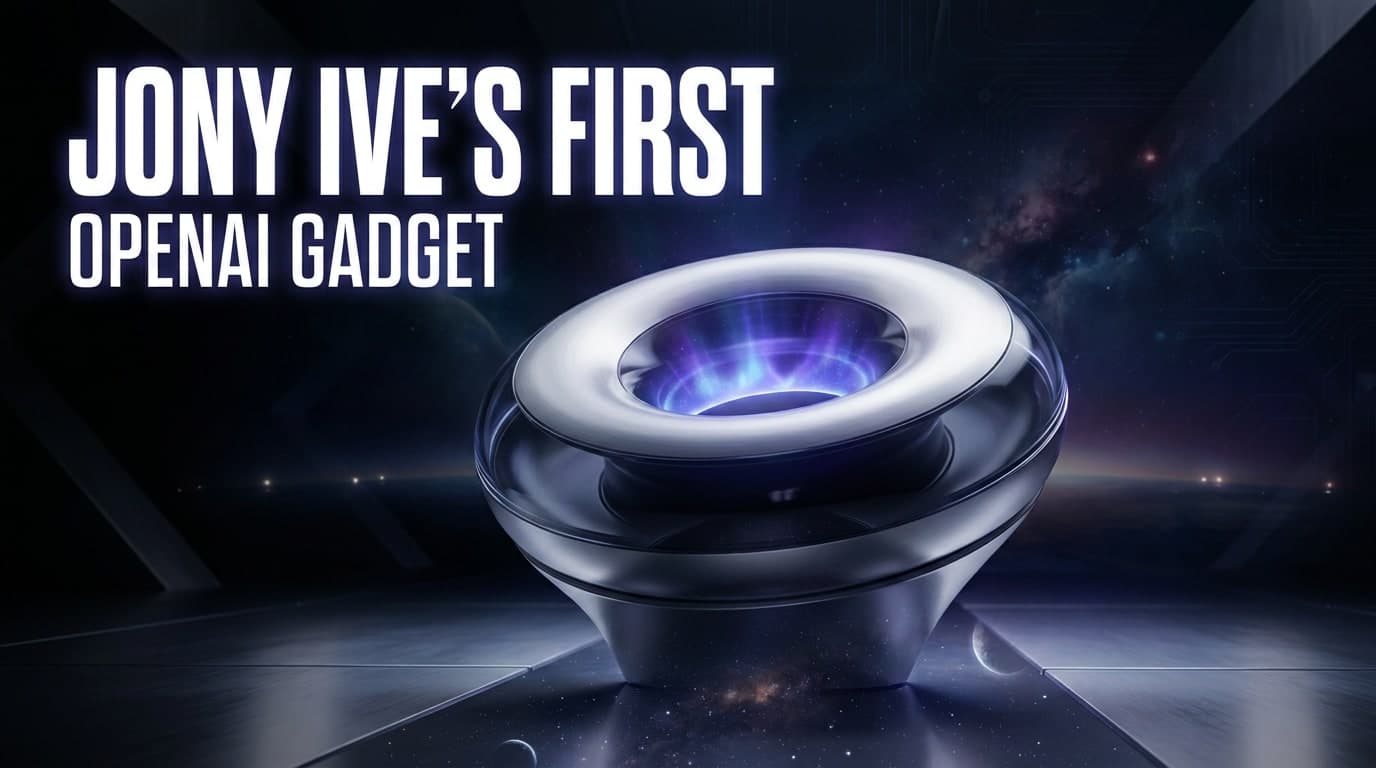
OpenAI's Jony Ive Speaker Signals AR Wearable Race
OpenAI and former Apple designer Jony Ive are developing a screenless smart speaker, targeted for 2027 at over $300 (USD). This marks OpenAI's first hardware product, a signal that ambient AI devices, not just apps, could shape the next wave of wearable computing.
What actually happened
According to Bonuz, citing Bloomberg reporter Mark Gurman, the device is described as 'a smart speaker without a display.' It runs on battery power, has a doughnut shape, and is roughly hockey-puck sized. OpenAI reportedly targets a 2027 launch, priced above $300 (USD). Gurman's sources say it will include moving parts that shift on their own to show when it is listening or responding. It will also carry lights, a camera system, and other sensors. Users could carry it around the home with one hand, similar to Amazon's discontinued Tap speaker. It reportedly mirrors ChatGPT's voice mode, but runs more advanced models built for humanlike conversation.
How we got here
OpenAI has stayed quiet publicly about hardware ambitions. Its president has said the company is 'building a family of devices' for its chatbots. Sam Altman reportedly said the project 'won't be your weird AI girlfriend.' This speaker would reportedly open that lineup. Ive, known for shaping Apple's iPhone era, now works with OpenAI while Apple and OpenAI remain locked in a separate lawsuit. Sources say the finished device will look and feel nothing like an Apple product. That distancing matters, since Ive's name alone invites comparison to Apple's design language.
Why this matters for you
For bonuz.market readers, this confirms a bigger bet: voice-first, screenless hardware is a real interface layer, not a side project. If OpenAI proves demand, Amazon, Google, and Apple may accelerate their own ambient AI devices, including smart glasses, the category this newsroom tracks closely. For builders in Web3 and lifestyle-app spaces, a hardware push from OpenAI adds pressure to design for voice and ambient interaction, not screens alone. It also shows AI labs want direct hardware revenue, not just subscription fees, a model that could shape how wearable devices monetize going forward.
The bigger question
OpenAI is wagering on screenless, voice-first hardware years after smart speakers already went mainstream. Will this shape become the standard way people talk to AI, replacing phone apps for good? Or will it end up as one gadget among many, sharing shelf space with smart glasses, phones, and existing speakers, each fighting for a narrow slot in daily routines?
What to watch
No confirmed launch date exists beyond the 2027 target reported in August 2026. Pricing above $300 (USD) remains unconfirmed, and OpenAI has not verified the report. Bonuz.market will track official statements from OpenAI, details on its broader 'family of devices,' and how rivals respond in the wearable and AR hardware race.